

Most countertop guides for humid spaces point you straight to quartz and call it done. That’s not wrong, but it skips the part that actually helps you decide. The best countertops for high-humidity areas are the ones that match how that room gets used, not just what looks good on a sample board.
Quartz is often the easiest fit: non-porous, consistent and low-maintenance day to day. But natural stone can work too, in the right space, with the right expectations in place. This guide breaks down what humidity does to different surfaces, which materials perform best in bathrooms and laundry rooms and what to watch for before you decide.
What Humidity Actually Affects in a Countertop Space
Not all moisture exposure is the same, and the distinction matters when you’re choosing a surface for a wet-prone room.
Moisture vs. Humidity vs. Standing Water
These three things affect countertops differently.
Humidity is ambient. It’s the moisture in the air of a bathroom or basement, and it’s relatively low-stakes for most surfaces on its own. But it compounds over years, especially in spaces that don’t ventilate well.
Direct moisture contact is a bigger factor: steam from a shower, condensation around a sink, or daily splash during regular use. This is where surface porosity starts to matter.
Standing water is the most damaging scenario. Left on a porous surface long enough, it can penetrate, stain or break down the material at the substrate level. Most countertop failures in high-humidity areas trace back to standing water that wasn’t wiped consistently, not humidity itself.
Why Bathrooms and Laundry Rooms Behave Differently Than Kitchens
Kitchens deal with heat, cooking acids and grease. Bathrooms and laundry rooms deal with something different: consistent moisture in a smaller, often less-ventilated space with frequent cleaning product exposure.
That changes which material tradeoffs matter most. In a bathroom, heat resistance matters less. How a surface handles daily water contact and cleaning products matters more. In a laundry room, you may also be dealing with detergent residue and stronger chemical cleaners on top of the baseline moisture load.
Why Material Fit Matters More Than Trend Appeal Here
A surface that looks right in a showroom can still be the wrong choice for a space that sees steam, splashes and cleaning products every single day. Countertops for high-humidity areas reward materials chosen for environmental fit first. Appearance is part of the decision, but it’s the second conversation, not the first.
Best Countertop Materials for High-Humidity Areas
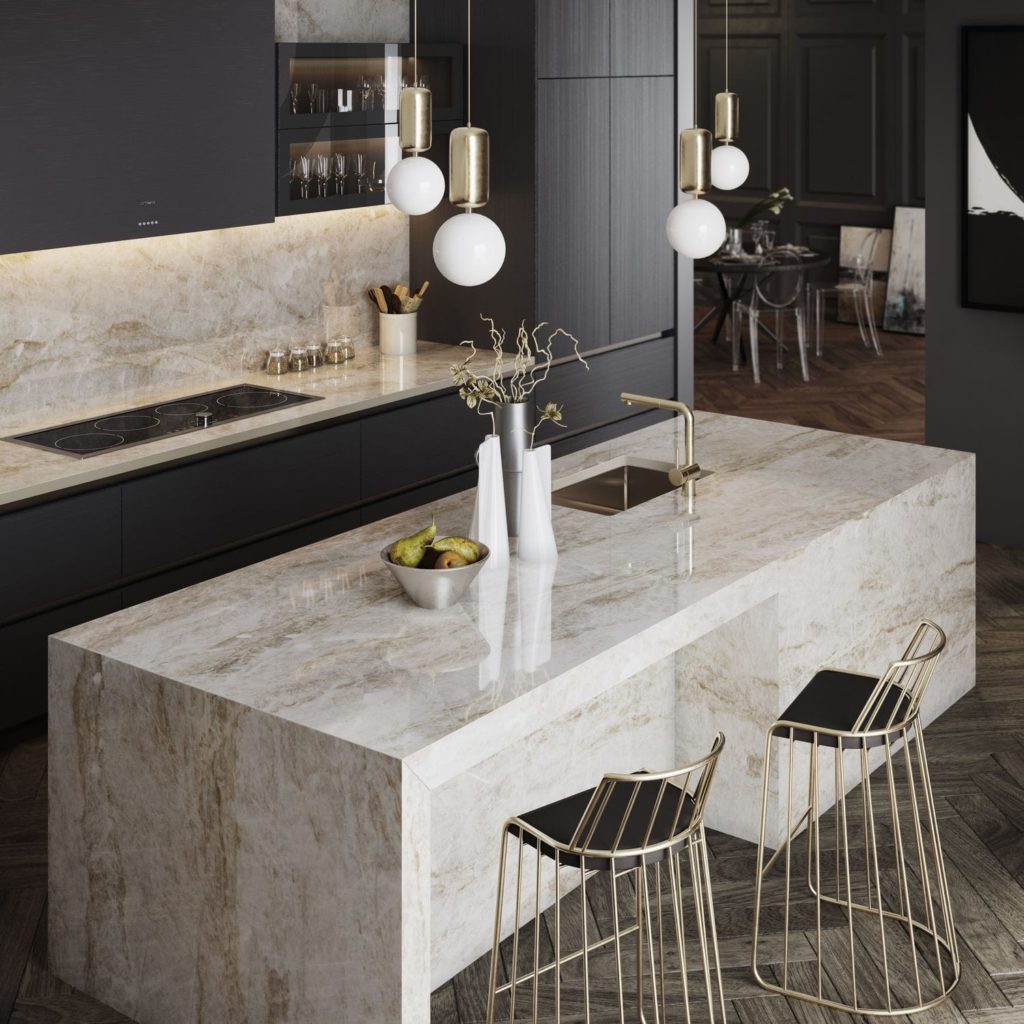
Different countertop materials respond to moisture in different ways. Porosity is the main variable: the more porous a surface, the more it absorbs water over time and the more care it needs to hold up in a wet environment. A quick look at how the most common options stack up:
- Quartz — Non-porous and engineered for consistency. It doesn’t need sealing and handles daily water contact without issue. The easiest fit for most bathroom countertops and laundry rooms.
- Granite — A strong performer when properly sealed. Denser than most natural stones, it holds up well in humid spaces as long as sealing is maintained annually. A smart option for homeowners who want natural stone without high-maintenance tradeoffs.
- Quartzite — Harder than marble and a stronger performer in wet spaces than most homeowners expect, but it does require sealing. Works well in bathrooms when chosen and cared for correctly.
- Marble — Porous and reactive to acidic cleaners, which makes it higher-maintenance in wet spaces. Not a bad choice for low-splash areas where the look is a priority, but it needs consistent care.
- Porcelain — Dense, non-porous and highly resistant to water and cleaning products. Often overlooked, but a practical option in utility spaces and laundry rooms where durability outranks natural stone appeal.
Not sure which material fits your space? Browse our full surface options or check what’s available in live inventory to see what’s ready for your project.
How to Choose the Right Material for Each Moisture-Prone Room
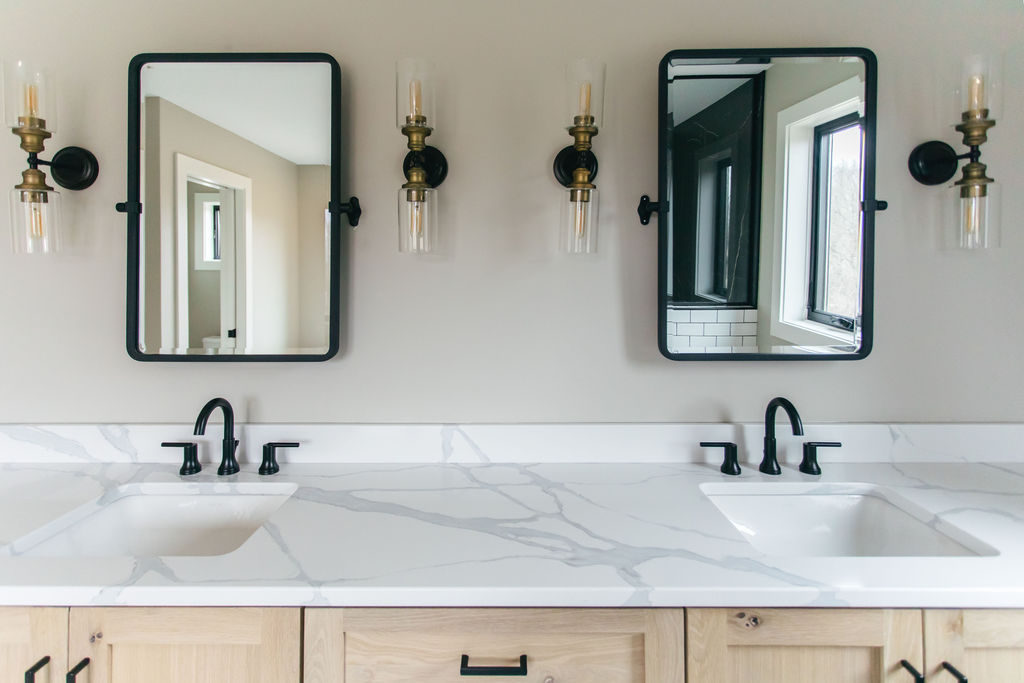
The right countertop material depends on how a space is actually used. A bathroom vanity and a laundry room counter don’t place the same demands on a surface, and the best choice shifts accordingly.
Bathrooms
Consistent splash, steam and daily cleaning product exposure make porosity the top priority. Quartz countertops are the most forgiving here. Granite works well with annual sealing. Marble can fit in lower-traffic bathrooms where the look is a priority and the homeowner is committed to upkeep.
Laundry Rooms
Detergent residue and stronger cleaning products add a chemical dimension that bathrooms don’t always have. Quartz and porcelain are the most practical choices. Natural stone can work, but it needs more frequent sealing attention in this environment.
Basement Bars and Utility Spaces
Moisture here often comes alongside heavier daily use, which raises the bar for durability. Quartz and granite both perform well. Porcelain is worth considering when practicality is the lead factor and the space needs to hold up to regular wear.
When Appearance Is the Priority
If the look of natural stone is non-negotiable, granite is the most forgiving option in wet spaces. Quartzite is a strong second for homeowners who want movement and character with reasonable durability. Either way, sealing and care expectations need to be part of the conversation before the material is selected, not after.
Moisture-Related Mistakes to Avoid
A few honest things worth knowing before you finalize a material for a wet space.
Assuming all stone performs the same. Granite, quartzite and marble are all natural stone, but their porosity levels are meaningfully different. The category doesn’t tell you much. The specific material does.
Confusing stain resistance with zero maintenance. Quartz handles daily moisture well and stays stable longer between cleanings. Natural stone that’s properly sealed performs well too. The gap shows up when maintenance gets skipped:
- Quartz holds up without much intervention
- Sealed natural stone loses protection gradually over time
- Unsealed natural stone absorbs moisture, stains and cleaning products directly into the surface
Leaving the sealing conversation until after installation. For any natural stone going into a wet space, sealing frequency should be part of the material decision, not an afterthought. Some stones need it annually. Others need it more often. Knowing this upfront changes how you weigh the options.
Choosing on color sample alone. A sample won’t show you how a surface holds up after 18 months of daily bathroom use. The look and the performance profile both need to fit the room.
Frequently Asked Questions
Is quartz good for bathroom countertops? Yes. Quartz is non-porous, doesn’t require sealing and handles daily water contact and cleaning products well. It’s one of the most practical choices for bathroom vanity countertops.
Does humidity damage granite countertops? Ambient humidity alone isn’t the concern. Consistent moisture contact on unsealed or under-sealed granite is where problems develop. With annual sealing and regular cleaning, granite holds up well in humid spaces.
What natural stone works best in bathrooms? Granite is the most forgiving. Quartzite is a strong option for homeowners who want more visual movement. Both require sealing, but neither is high-maintenance when cared for correctly.
Are marble countertops a bad idea in humid spaces? Not automatically. Marble is more porous and reactive to acidic cleaners, which raises the maintenance bar in wet rooms. It works in lower-splash bathroom areas where upkeep is consistent, but it’s not the most practical fit for laundry rooms or utility spaces.
Do bathroom countertops need sealing? Quartz and porcelain don’t. Most natural stone countertops do, including granite, quartzite and marble. Sealing frequency depends on the specific stone and how much moisture the surface sees regularly.
Ready to Choose the Right Surface for Your Space?
Choosing the right surface for a moisture-prone room comes down to knowing how that space is used and what level of care fits your lifestyle. If you’re still weighing your options, our design consultants can help you narrow it down based on your room, your goals and your budget.
Visit any of our showroom locations to explore materials in person, or browse our full surface options and live inventory to see what’s available for your project. When you’re ready to take the next step, we’re ready to help.