

Walk into a well-designed kitchen and your eye usually lands on the island first. Often it’s the countertop doing the work: a sweep of veining, a thick mitered edge, a waterfall panel that pulls the room together. That effect isn’t luck. It comes from deliberate choices about material, movement and proportion.
These kitchen island ideas focus on the surface that makes the difference, with practical guidance on color, edge profiles, overhangs and seating so your island feels like a focal point you planned, not one you hoped for.
Start With How You Use the Island
Before you think about looks, think about the work the island does. The way you use it should drive every design choice that follows.
Ask yourself how the space actually functions day to day:
- Prep and cooking. Heavy chopping, hot pans and frequent cleanup call for a durable, forgiving surface.
- Seating and gathering. Stools and an overhang change the proportions and the support the slab needs.
- Homework and projects. A family hub takes daily wear from more than just cooking.
- Serving and entertaining. A buffet-style island leans on surface area and a clean look.
- Baking. A smooth, cool surface and room to spread out matter more here.
Function first, beauty second. The two are not in conflict, but the order matters. An island that looks striking and frustrates you every dinner is a design that missed. When the surface fits how you live, the good looks have something to stand on.
This is also where a quick honesty check helps. A surface that sees daily homework, snacks and spills has different needs than one used mostly for show.
Choose a Countertop Material With the Right Visual Weight
The island is often the boldest surface in the kitchen, so material choice carries real weight, both visual and practical. Each option brings a different look and a different care commitment.
Quartz. Engineered and non-porous, quartz gives you consistent color and a polished look with simple day-to-day care. It is generally low maintenance and a strong fit for busy family islands. Keep hot pans on a trivet, since heat is its main limit. Edge Collection and Edge Pro quartz options are an easy starting point when you want reliable color and pattern.
Granite. Natural stone with strong durability and one-of-a-kind character. Each slab is unique, with natural movement that makes an island feel grounded. Granite needs periodic sealing and can show pits and fissures, which are part of the stone.
Quartzite. A hard natural stone with the dramatic movement many homeowners want from marble and better everyday durability. It also requires sealing. Edge Allure options are worth exploring when you want exotic movement with showroom guidance.
Marble. Loved for its soft, bright look, but calcite-based and prone to etching from acidic spills. It can make a striking island for homeowners who accept the care and keep acids in check.
Compact surfaces like Dekton. Dense and modern, a good fit when you want a clean, streamlined island.
If you are deciding between engineered and natural options, our guide on natural stone vs engineered surfaces breaks down the tradeoffs. The right visual weight is the one that suits both your eye and your routine.
Use Veining, Movement and Color to Create Focus
A focal point does not have to shout. It has to be intentional. Veining, movement and color are the tools that turn a slab into the centerpiece of the room.
There are two directions that tend to work:
- Dramatic movement. A slab with bold veining or strong pattern can carry the whole island on its own. This is where natural stone and Edge Allure materials shine, and where a full slab view matters most.
- Quieter contrast. A calmer surface in a tone that plays against your perimeter counters or cabinets creates focus through contrast instead of pattern.
For materials with heavy veining or a strong pattern, ask about a digital layout. It lets you preview how the movement will fall across the island so the most striking part of the slab lands where you want it. Browsing the inspiration gallery is a good way to see how movement and color read at full scale.
One caution worth keeping in mind. More drama is not always better. The island should lead the room, not fight the rest of the kitchen for attention.
Consider Edge Profiles, Overhangs and Waterfall Details
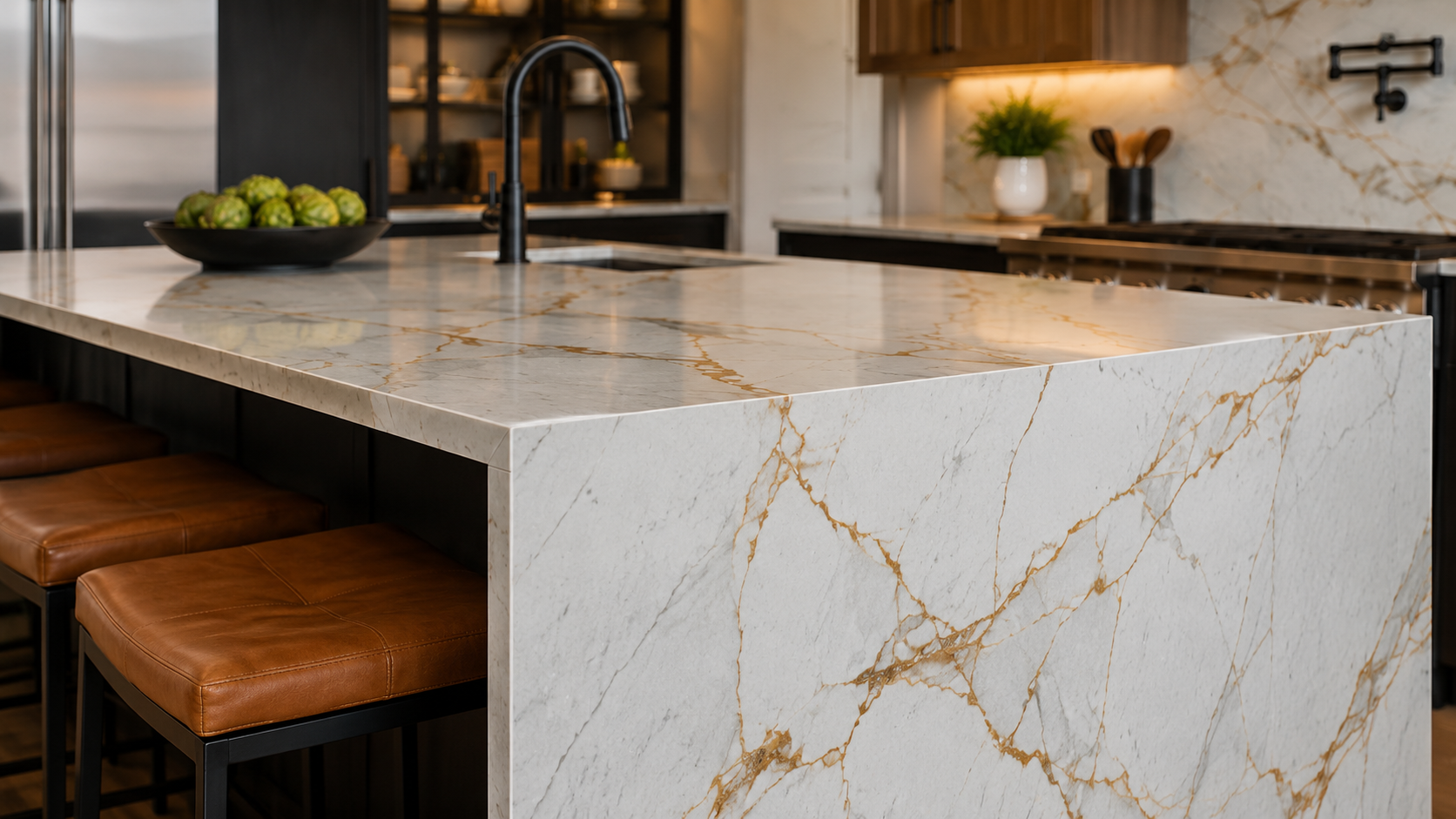
This is where design meets fabrication. The details below shape both the style and the function of the island, and they are easy to overlook until install day.
Edge Profiles
The edge changes how thick and how formal the island reads. A clean, simple edge feels modern. A more detailed profile adds traditional character. A mitered edge can make a slab look thicker and more dramatic without changing the material. Cutting Edge Countertops offers a wide range of edge designs to match the look you are after.
Seating Overhangs
If you want stools at the island, the overhang has to be planned. Comfortable seating usually needs enough overhang for knees and stools, and that extra span changes the support the slab requires.
Support and Brackets
Stone is strong but not unlimited. Past roughly 12 inches, an unsupported overhang can stress and crack over time. Brackets, corbels or a hidden steel support keep a seating overhang safe, sized to the material and the span.
Waterfall Leg
A waterfall leg, where the countertop runs down the sides to the floor, makes a strong statement and shows off veining across panels. It is striking, but it is not right for every kitchen or every budget. It works best when the material has movement worth carrying down the side and the layout suits a bold look.
The takeaway here is simple. The most beautiful island details are also fabrication decisions, so they belong in the conversation early. Here is more on the benefits of working with a local countertop fabricator who can plan these details with you.
Tie the Island Into the Rest of the Kitchen
An island is a focal point, not an island unto itself. It should stand out while still belonging to the room around it.
A few ways to keep it connected:
- Match or contrast on purpose. The island countertop does not have to match the perimeter. A deliberate contrast often looks more designed than an exact match. The key is choosing, not defaulting.
- Coordinate cabinetry. A different cabinet color on the island is a classic way to set it apart without clashing.
- Layer in lighting. Pendant lights draw the eye and make the surface the star after dark.
- Mind the backsplash and hardware. These smaller finishes should echo the island, not compete with it.
When the island leads and the rest of the kitchen supports it, the whole space feels intentional. Reviewing live inventory alongside your cabinet and finish samples makes that coordination far easier.
See Your Island Come Together in Person
The best kitchen island ideas only go so far on a screen. Material, veining, edge profile and overhang all read differently at full scale, next to your cabinets and under your lighting. That is the work a Design Consultant handles every day, helping you pull the choices into one island that fits how you live and anchors the room. If budget is part of the plan, countertop financing can help.
Ready to design an island worth looking at? Schedule an appointment and see full slabs side by side with a Design Consultant.
FAQs About Kitchen Island Countertops
What countertop material is best for a kitchen island?
It depends on how you use the island. Quartz is a practical, easy-care choice for busy family islands. Granite and quartzite bring natural durability and character. Marble suits homeowners who love the look and accept the care. The best material is the one that fits both your style and your routine.
Should a kitchen island countertop match the perimeter countertops?
Not necessarily. A deliberate contrast between the island and the perimeter often looks more designed than an exact match. The goal is an intentional choice that coordinates with your cabinets, backsplash and lighting.
Are waterfall countertops still in style?
Yes, waterfall leg remain popular for islands, especially with materials that have strong veining. They make a bold statement, but they suit some kitchens and budgets better than others, so they are worth weighing against a standard edge.
How much overhang should a kitchen island have for seating?
Comfortable seating generally needs enough overhang for knees and stools. The exact figure depends on the material and layout, and any extended overhang needs proper support, so it is best confirmed with your fabricator.
What edge profile works best for a kitchen island?
There is no single answer. A clean edge reads modern, a detailed profile feels traditional and a mitered edge adds visual thickness and drama. The right profile depends on the material and the overall style of your kitchen.