

Most homeowners spend weeks comparing countertop materials and make their sink decision in a single afternoon. It feels like a smaller choice, but the two are more connected than they appear. The wrong pairing can create installation headaches, long-term maintenance problems, and a finished kitchen that almost works.
With 20 years of experience and roughly 15,000 projects completed annually across Ohio, Indiana, and Michigan, our Design Consultants have seen what happens when the sink decision gets treated as an afterthought. This guide walks you through what actually matters before you commit to either.
Why Your Countertop Material Affects Your Sink Choice
Your countertop material is not a neutral backdrop for the sink. It is a structural and functional layer that determines how well the sink installs, how the area holds up over time, and how much maintenance you will be managing around the basin for years to come. Two areas drive most of the compatibility decisions:
The cutout:
- Every sink installation requires a precise opening in the surface, and how cleanly that cut holds depends on the material
- Granite and quartz countertops both support tight, finished edges that stay stable over time
- More porous or brittle surfaces require more care during fabrication to avoid chipping or stress fractures along the cutout line
Moisture exposure around the sink zone:
- The area around a sink sees more water, cleaning products, and daily wear than almost any other part of the kitchen countertop
- Quartz handles moisture at the seam reliably because it is non-porous
- Natural stone like granite performs well when properly sealed, but that sealing needs to be maintained over time
The sink zone is the hardest-working area of the countertop. Treat it as a design and material decision from the start.
Undermount vs. Drop-In: How the Installation Type Changes Everything
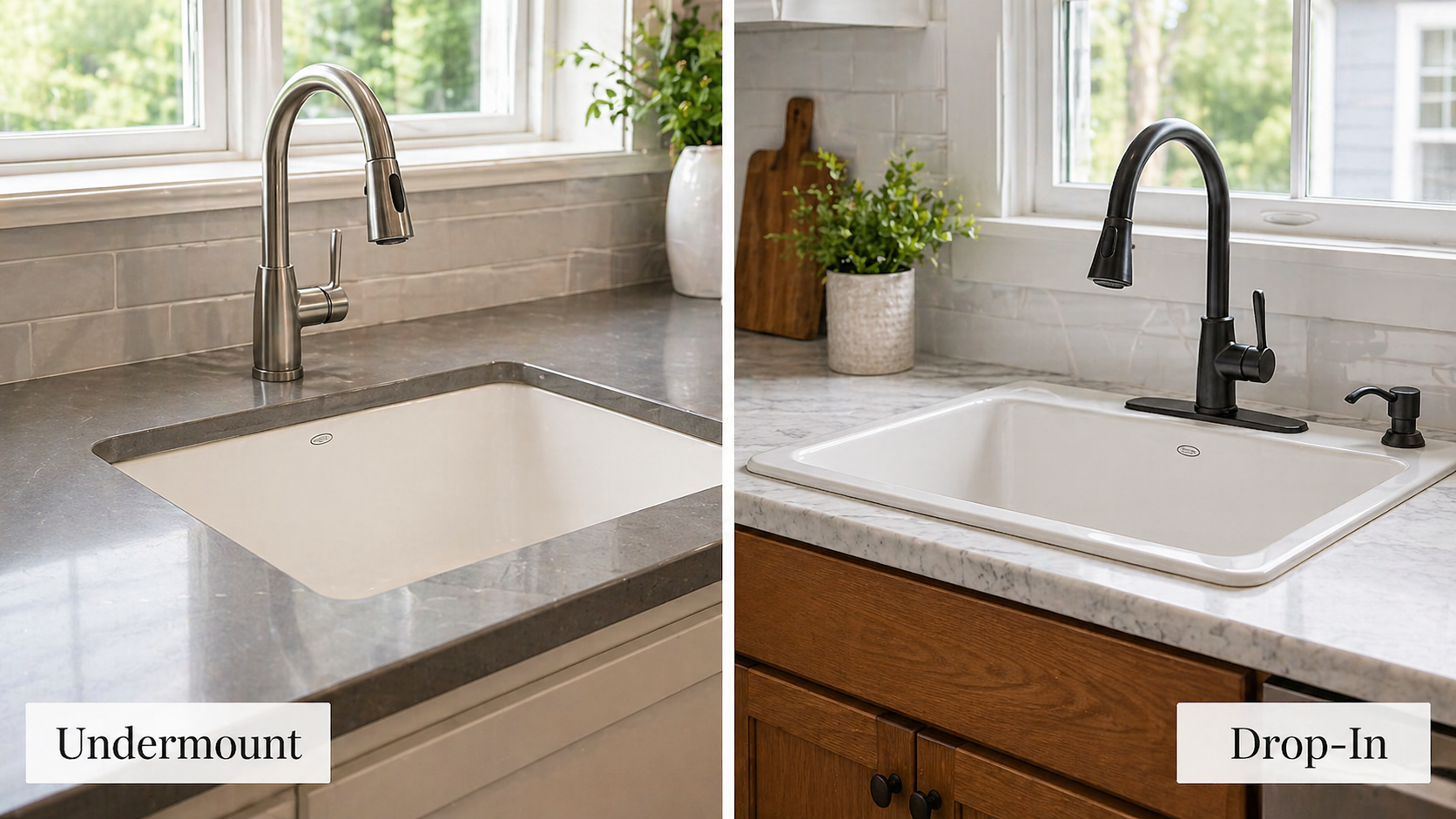
Most homeowners pick a sink style based on looks. The installation type is what actually interacts with your countertop, and getting that relationship wrong creates problems that are difficult and expensive to fix after the fact.
Undermount Sinks
An undermount sink mounts below the countertop surface, leaving the stone or engineered surface fully exposed around the basin. The result is a clean, uninterrupted look that is also easier to wipe down. But that installation method places real demands on the material above it.
Here is what your countertop needs to support an undermount install:
- A material that can hold a clean, finished cutout edge without chipping or cracking during fabrication
- Enough thickness and structural integrity to support the sink’s weight at the rim
- Reliable moisture resistance at the seam where the sink meets the underside of the surface
Quartz and granite countertops are both well-suited for undermount installations. If you want to go deeper on which sink styles work best for different kitchens, our guide to the seven best types of kitchen sinks covers the full breakdown.
Drop-In Sinks
A drop-in sink sits on top of the countertop with a rim that rests along the cutout edge. The installation is more forgiving across a wider range of surface materials, and it is generally simpler to replace down the road.
The tradeoff is the rim itself:
- Water, crumbs, and cleaning residue collect along the seal between the rim and the surface
- That seal needs to be maintained over time to prevent moisture from working underneath
- The rim interrupts the visual continuity of the countertop, which matters in more design-forward kitchens
Drop-in sinks are a practical, reliable choice. They work particularly well when budget, material flexibility, or future replaceability is a priority.
A Sink Cutout Detail Worth Asking About Before Fabrication
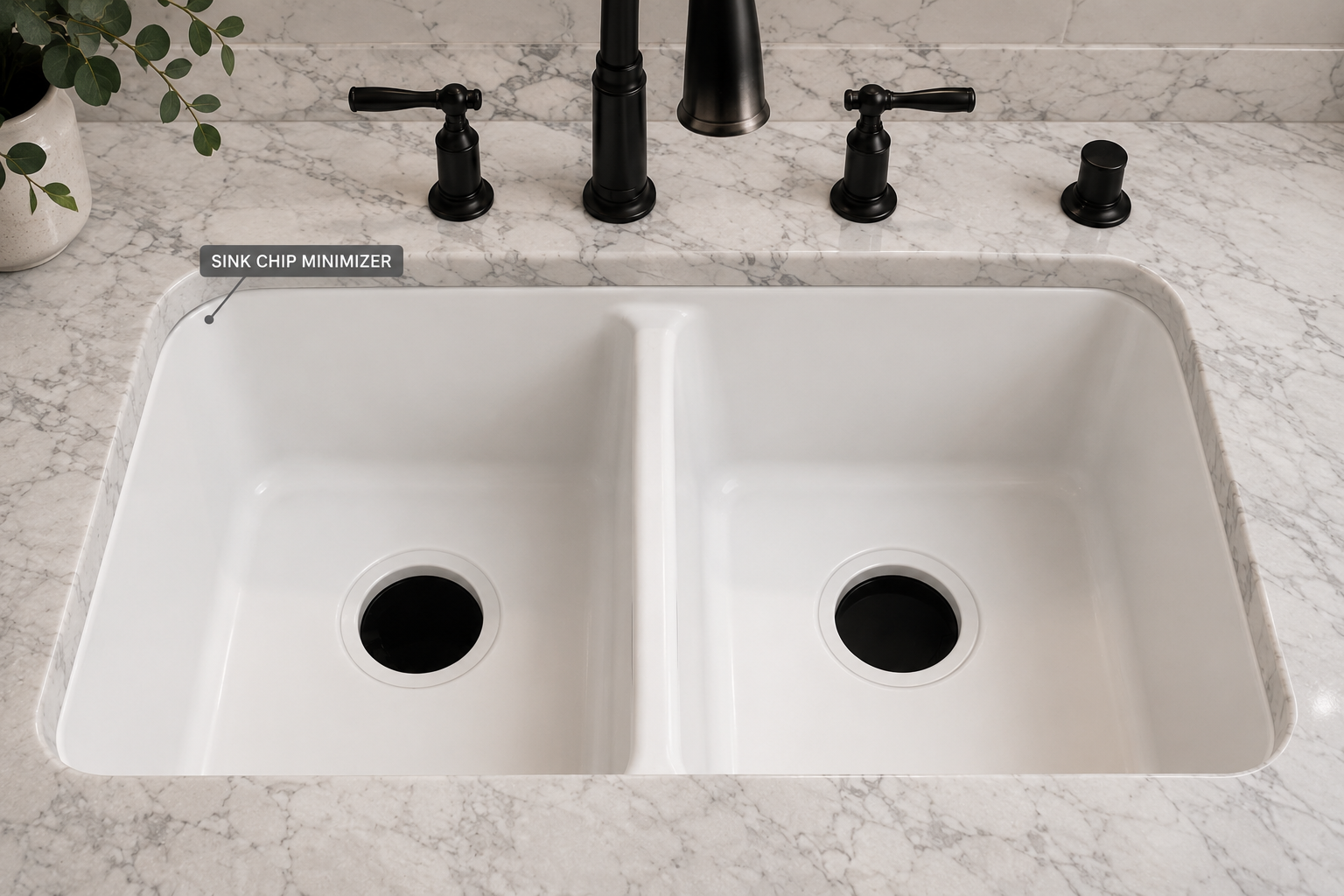
Once you choose an undermount or drop-in sink, the sink cutout becomes one of the most important fabrication details in the project. That edge sees daily contact from pots, pans, dishes, and cleaning—especially in busy kitchens.
For natural stone and quartz countertops, Cutting Edge Countertops offers a Sink Chip Minimizer as an available enhancement. It adds a rounded edge along the inside of the sink cutout to help provide an added layer of impact resistance in one of the hardest-working areas of the countertop.
It is worth asking your design consultant about this before fabrication begins.
Once your countertop material, color, and finish are selected, enhancements like this can help fine-tune how the finished surface looks and performs. In bathrooms, the same rounded edge can also soften the sink opening for a cleaner, finished appearance.
How to Match Your Sink Material to Your Countertop
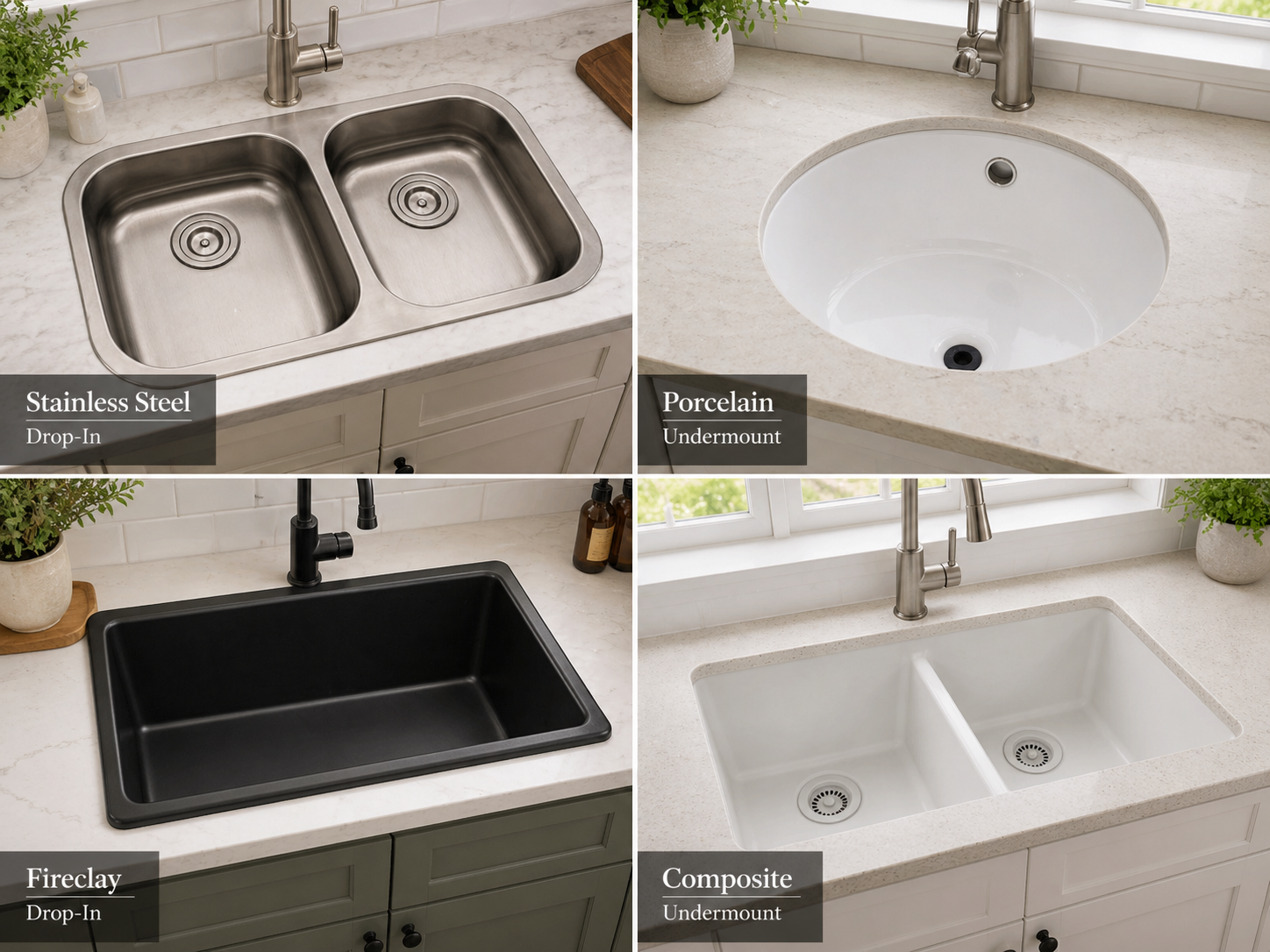
The sink material you choose should complement not just the look of your countertop but how the two surfaces perform together day to day. At Cutting Edge Countertops, we offer four sink collections, and each one has a natural fit with specific surface types and kitchen styles.
Stainless Steel Collection
- Made with 304 grade stainless steel with undermount-ready curved corners
- Pairs cleanly with quartz and granite countertops, especially in modern or transitional kitchens
- A practical choice for high-use households where durability and easy cleaning take priority
Composite Collection
- Composed of 80% granite and 20% acrylic, making it scratch, stain, heat, and acid resistant
- A natural complement to stone countertops because the material composition is already aligned
- Non-porous surface means low maintenance around the sink zone, which matters in busy kitchens
Porcelain Collection
- Clay-based with a lustrous, corrosion-resistant surface available in white and ivory
- Works well alongside marble countertops and lighter natural stone surfaces where a softer, classic palette is the goal
- Easy to clean and well-suited to design styles that lean traditional or transitional
Fireclay Collection
- Molded at extreme temperatures for a tough, smooth body with a handcrafted appearance
- Makes a strong visual statement and tends to anchor farmhouse or more traditional kitchen designs
- Hard enamel finish resists scratches and stains, holding its finish well for many years with basic care
No single collection is right for every kitchen. The material, your daily habits, and your countertop surface all point toward different answers.
Seeing these options alongside your countertop samples in person makes the pairing decision easier. You can browse the full sink collections to get a sense of what is available before your visit.
Practical Considerations Before You Commit
A few structural and functional details deserve a close look before you finalize your pairing. None of these are complicated, but catching them early saves you from decisions that are costly to change after installation.
- Countertop thickness and cutout sizing. The thickness of your slab affects how the cutout edge looks and how well it supports the sink. Standard countertop thickness is 3 cm for most granite and quartz installations. Thinner materials may require additional support or limit which sink profiles work cleanly.
- Overhang and structural support near the sink zone. A sink cutout removes material from an area that already carries load. If your layout includes an island or peninsula with an overhang near the sink, confirm that the support plan accounts for the cutout. Unsupported spans beyond 12 inches in either direction from the basin can create stress over time regardless of material.
- Seam placement. Where fabrication seams land in relation to the sink matters. A seam placed too close to the cutout edge introduces a potential weak point. Discussing seam placement with your fabricator before templating gives you the best chance of a clean, durable result.
- How you actually use your kitchen. A household that cooks heavily, deals with frequent spills, or has young children needs a countertop and sink combination that holds up without constant attention. Matching material maintenance requirements to your real habits, not your ideal habits, is what makes the finished kitchen work long term. Our spring kitchen cleaning guide covers what routine care actually looks like for both surfaces together.
Talking through these points with your Design Consultant before templating begins is the most reliable way to avoid surprises on install day.
Common Mistakes Homeowners Make
These are not design taste problems. They are process and timing issues, and they come up often enough that they are worth knowing before you get too far into the project.
- Choosing the sink after the countertop is already ordered. Once your slab is locked in, your sink options narrow fast. You are no longer choosing the best pairing. You are choosing the best option that works with a decision you have already made. Bringing both choices to your Design Consultant at the same time gives you real flexibility.
- Picking installation type based on looks alone. Undermount sinks look clean and modern, which is why they are popular. But if the countertop material cannot support a finished cutout edge or handle moisture at the seam reliably, that aesthetic choice creates a maintenance problem. Understand what your surface requires before committing to an installation method.
- Underestimating the maintenance commitment around natural stone. A natural stone surface needs to be resealed every one to two years, and the sink zone is the area most exposed to water, soap, and acid. If that maintenance cadence does not fit your kitchen habits, it is worth factoring into the material decision before installation, not after. For a closer look at how material choices are shifting, our sink and countertop trends guide covers what homeowners are choosing in 2026 kitchens.
- Underestimating the visual weight of the sink in the finished space. A large single-basin sink changes how the entire countertop reads. So does a workstation sink with integrated ledges. Viewing the sink profile alongside your actual slab sample, rather than evaluating them separately, is the most reliable way to confirm the pairing works.
Most of these come down to timing. The earlier both decisions are on the table together, the more options you actually have.
Ready to Get the Pairing Right?
A countertop and sink are one project, not two separate purchases. The material you choose for your surface shapes which sinks install cleanly, which ones hold up over time, and how much upkeep the area around the basin actually demands. Getting both decisions on the table at the same time, with a clear sense of how installation type, sink material, and surface performance work together, is what separates a kitchen that functions well from one that almost does.
When you are ready to explore your options, our Design Consultants are here to help. Visit any of our showroom locations in Ohio, Indiana, and Michigan to compare sink collections alongside live countertop inventory and get guidance tailored to how you actually live in your kitchen.
Frequently Asked Questions
Can you use any sink with a quartz countertop?
Most sink types are compatible with quartz, but undermount installations are the most common pairing because quartz holds a clean, finished cutout edge reliably. Drop-in sinks also work with quartz without issue. The main consideration is making sure the cutout is fabricated correctly, as precision during cutting matters for a clean result.
What sink works best with granite countertops?
Granite handles undermount installations particularly well because of its density and structural integrity at the cutout edge. Composite sinks are also a natural complement to granite given their shared material composition. Stainless steel is another reliable option that pairs cleanly with most granite tones, especially in kitchens that lean modern or transitional.
What is a Sink Chip Minimizer?
A sink chip minimizer is an enhancement available for natural stone and quartz countertops. It adds a rounded edge along the inside of the sink cutout to help provide impact resistance where pots, pans, and daily use can chip the edge. It can also be used in bathrooms to create a softer, cleaner-looking sink opening.
Is undermount or drop-in better for natural stone?
Undermount is generally the preferred choice for natural stone surfaces like granite and quartzite because the material supports a precise, finished cutout without compromising the edge. Drop-in sinks work with natural stone as well, but the rim can interrupt the visual continuity of a stone surface that has strong movement or veining. The right choice depends on your design direction and how the kitchen is used day to day.
How much countertop space should I plan for around the sink?
A practical rule is to leave at least 18 to 24 inches of usable surface on at least one side of the sink for food prep and dish staging. Sink size affects how much of that space remains after the cutout, so confirming the sink dimensions against your overall countertop layout before ordering is worth doing early in the process.
Does sink size affect the structural integrity of the countertop?
It can. A larger cutout removes more material from the slab, which affects how load is distributed across the surface. For oversized single-basin sinks or workstation sinks with wide openings, confirming that the support plan accounts for the cutout span is important. Unsupported sections beyond 12 inches from the cutout edge can create stress over time, particularly in natural stone surfaces.
Should the sink be selected before or after the countertop is templated?
The sink should be in the home or confirmed before templating begins. Fabricators need the actual sink or its precise specifications to cut the opening correctly. Templating without a confirmed sink introduces measurement risk and can require costly adjustments after the fact.