

If you have started planning a kitchen remodel, you have likely seen countertop pricing listed “per square foot.” At first glance, that seems simple. Multiply the square footage by the price and you have your total.
In reality, countertop cost involves more than just the slab. This guide breaks down what per square foot pricing actually includes, what affects your total cost and how to compare estimates with confidence.
What Does “Per Square Foot” Really Mean?
When you see countertop pricing listed per square foot, it can sound straightforward. Multiply the size of your kitchen countertops by the price and you have your total. In reality, that number is often just a starting point. Understanding what is included in that figure helps you compare quotes accurately and avoid surprises later.
Material Cost vs Installed Cost
Some suppliers advertise the cost per square foot for the raw slab only. That price reflects the countertop material itself, whether it is quartz, granite or another natural stone.
Per square foot installed pricing is different. Installed pricing typically includes fabrication, edge finishing, cutouts and professional installation.
The difference between material-only pricing and a fully installed countertop can be significant. Before comparing numbers, it is important to confirm what the quote actually covers.
Why Square Foot Pricing Is Only the Starting Point
Square footage plays a major role in your countertop cost, but it is not the only factor. Your kitchen layout affects how slabs are cut and how efficiently material is used. A simple layout may require fewer seams, while a more complex design can increase fabrication time.
Edge profiles, sink and cooktop cutouts and backsplash selections also contribute to the total project cost. Labor costs can vary depending on the complexity of installation and the level of customization you choose. Square footage gives you a foundation, but your final countertop pricing reflects the full scope of your project.
What Impacts the Cost Per Square Foot of Countertops?
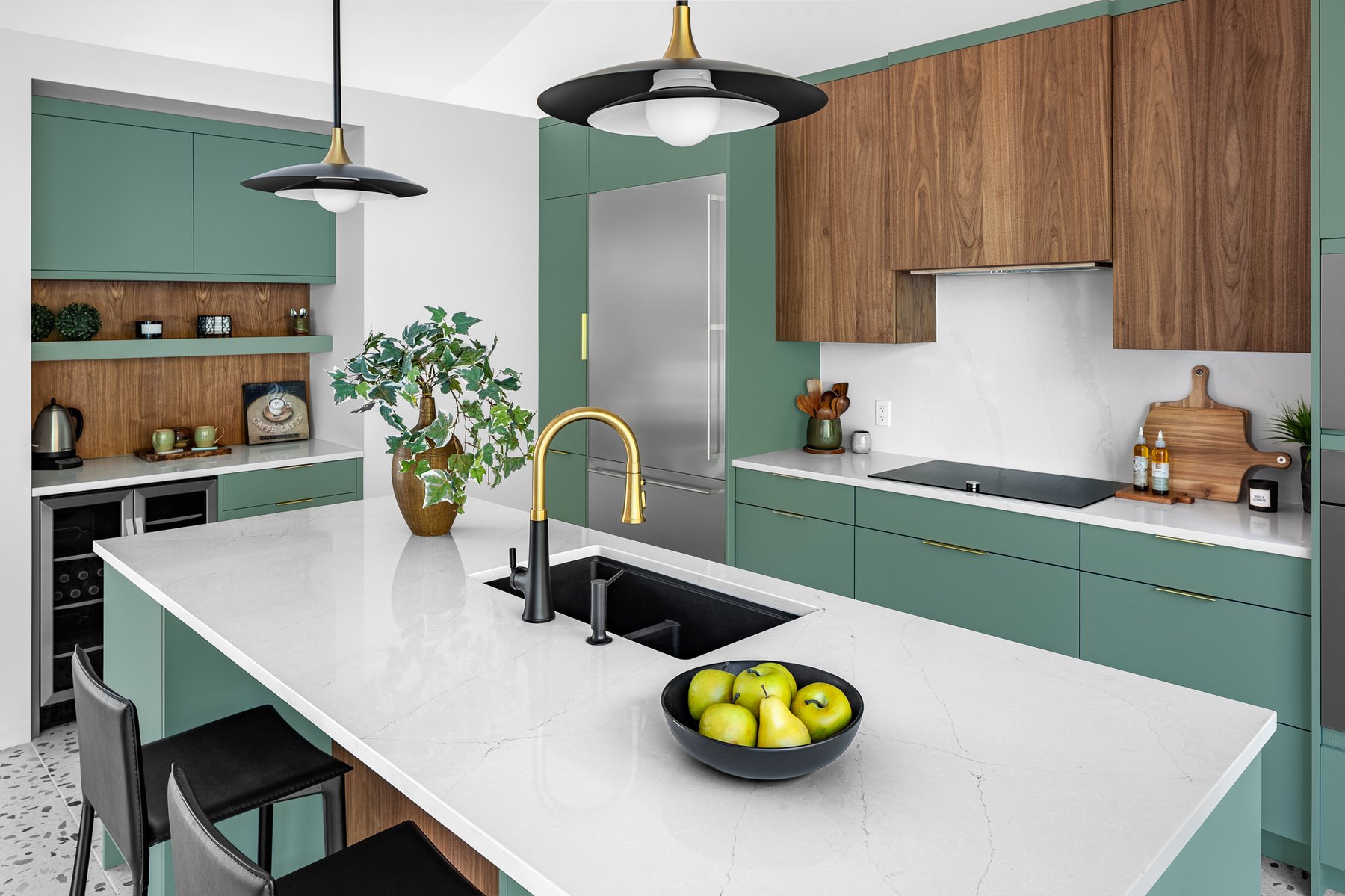
Once you understand the difference between material-only pricing and installed pricing, the next step is knowing what actually drives the number you are quoted. Even when two projects have similar square footage, the cost per square foot can shift based on your material choice and how detailed the fabrication needs to be.
Countertop Material
Depending on the countertop material you choose, the cost per square foot can vary quite a bit. Some materials are easier to source, cut and finish. Others require more planning, specialized fabrication or additional handling because of their pattern, thickness or overall characteristics.
In most kitchens, pricing differences come down to the category you choose:
- Quartz countertops: Engineered, consistent in color and pattern, often straightforward to fabricate
- Granite and marble: Unique slab variation, may require more careful selection and planning
- Quartzite: Natural stone with dramatic movement that can require extra attention during layout and fabrication
- Compact surface like Dekton: High-performing material that may require specialized fabrication based on the product and design
Materials also differ in availability, slab size, colors and patterns and fabrication complexity. A consistent, solid color may be more efficient to fabricate than a bold veined slab that needs more precise alignment to look right.
Slab Size and Layout Efficiency
Your countertop square footage matters, but so does how that square footage fits within a slab. Slabs are cut to match your layout, and your kitchen design affects how efficiently material can be used.
Larger slabs can sometimes reduce seams, which many homeowners prefer for both looks and cleaning. At the same time, certain layouts create more leftover material, especially when there are multiple angles, long runs or large islands.
For example, a large, simple kitchen with long straight runs may be more efficient to fabricate than a smaller kitchen with multiple corners, angles or cutouts. In some cases, a more complex layout requires additional planning, cutting and finishing, which can influence the overall project cost.
Edge Profiles and Customization
The edge you choose plays a bigger role in pricing than many people expect. A simple eased edge is typically faster to fabricate, while more detailed edge profiles require additional shaping, finishing and inspection.
Options such as a bullnose or other decorative profiles involve more labor and more time at the equipment. Corners and transitions can also affect complexity, especially when the design includes unique shapes or thicker-looking edges. If you want a more custom look, it can be helpful to think of edge profiles as both a design detail and a fabrication detail.
Cutouts and Fixtures
Cutouts are another common factor in countertop pricing. Most kitchens need at least one sink cutout, and many also include cooktop cutouts, faucet holes or specialty shapes depending on the fixture style.
Each cutout requires precise measurements and careful fabrication, and more cutouts typically increase fabrication time. If your design includes multiple fixtures, an apron-front sink, or unusually shaped features, it is worth expecting that the added detail may influence your overall countertop cost.
Additional Costs Beyond Square Foot Pricing
Even when you understand cost per square foot, your total countertop project may include additional services. These are not hidden fees. They are part of completing the job properly and safely.
Knowing about them ahead of time helps you plan with confidence.
Additional costs may include:
- Removal, tear out and disposal of existing countertops
- Plumbing reconnection after your new countertop installation
- Backsplashes or 2CM splashes, which may be measured differently from countertops
- Coordination with tile or ceramic backsplash installers, if applicable
- Digital layout services for slabs with heavy veining or movement
- Brackets for overhang support
- Specialty sink accessories or additional cutouts
These details are not about inflating pricing. They are about ensuring your finished countertops look intentional, perform well and meet your expectations.
How to Compare Countertop Quotes with Confidence
Once you start collecting estimates, you may notice that pricing can vary from one fabricator to another. The difference is not always about the countertop material itself. It often comes down to what is included and how the project is structured.
Taking a few minutes to review the details can help you compare quotes fairly and avoid surprises later.
Ask What Is Included
Not all quotes are structured the same way. Before comparing numbers, make sure you understand exactly what each estimate covers.
You may want to ask:
- Is professional installation included in the price per square foot?
- Are sink and cooktop cutouts included?
- Are edge profiles part of the base price, or are they additional?
- Is tear out and disposal of old countertops included?
- Is plumbing reconnection handled after installation?
Two quotes may appear similar at first glance, but the scope of work can be very different.
Look at Total Project Cost, Not Just Per Square Foot
Square foot pricing is helpful, but it should not be the only number you focus on. A lower cost per square foot does not always mean a lower total project cost.
When reviewing an estimate, consider:
- The complete scope of your countertop project
- The installation timeline
- The level of service and communication offered
- The experience and reputation of the fabricator
Choosing kitchen countertops is a long-term investment. Looking at the full picture, not just a single number, will help you make a decision you feel confident about.
Clarity Helps You Plan with Confidence
Understanding countertop pricing makes it easier to plan your kitchen renovation within your budget. When you look beyond the cost per square foot and consider materials, fabrication and installation together, the overall cost becomes clearer.
Whether you are selecting quartz, natural stone, porcelain or another highly durable surface, asking the right questions helps you build your dream kitchen with confidence. A professional consultation allows you to review options, compare costs and choose a solution that fits both your design goals and your long-term plans.
Frequently Asked Questions About Countertop Pricing
How much do kitchen countertops cost per square foot?
The cost of kitchen countertops varies depending on the material, fabrication details and installation requirements. Materials like granite countertops are priced differently from quartz and Dekton. Be cautious of advertised numbers like $20–$50 per square foot without clarification. That figure may reflect material only and not the cost to install, fabricate, or dispose of old countertops.
Is quartz more expensive than granite?
It depends on the specific selection. Some quartz countertops are priced similarly to granite, while others fall into higher tiers depending on the brand, color and design. Pricing always depends on the specific material, not just the category name.
What adds the most to countertop cost?
Several factors impact the overall cost of countertops. Premium kitchen countertop materials, detailed edge treatments, multiple cutouts and complex edge and corner layouts can all increase installation costs. Removing and disposing of old countertops, choosing a backsplash can also influence your final project cost.
Does square footage determine total cost?
Square footage is important, but it is not the only factor. Layout complexity, number of cutouts and the finished edge you choose all affect pricing. Some projects are measured per linear foot for backsplashes rather than per square foot. When you compare costs, focus on the total countertop project scope rather than one single number.