

The countertop that looks perfect in a showroom doesn’t always hold up in a busy family kitchen. Stains from tomato sauce, scratches from a cutting board, or a surface that needs constant sealing can turn a beautiful kitchen into a maintenance burden.
The problem? Most homeowners choose by appearance first and discover the real-life tradeoffs later. The best countertop for a busy family kitchen isn’t always the most popular one. It’s the one that fits how your household cooks, cleans and lives every day.
As an accredited member of the Natural Stone Institute, we’ve helped thousands of families work through exactly this decision. This guide breaks down the top materials by real-life performance so you can choose with confidence.
What Busy Family Kitchens Really Need From a Countertop
A family kitchen doesn’t get gentle use. Between morning routines, after-school snacks, weekend cooking sessions and everything in between, your countertops absorb a lot of daily contact. Before you compare materials, it helps to understand what that kind of household actually demands from a surface.
Resistance to Spills, Splatters and Daily Mess
The first thing a busy kitchen needs is a surface that doesn’t punish every spill. The key factor here is porosity. Quartz is non-porous, which means liquids sit on the surface rather than absorbing into it. Tomato sauce, juice and coffee wipe away cleanly without leaving a mark.
Natural stone surfaces, including granite and quartzite, are porous to varying degrees and require periodic sealing to maintain strong stain resistance. When sealed properly and on schedule, both perform well in active kitchens.
Marble is calcite-based, which means acidic foods and liquids, including lemon juice, vinegar or citrus-based cleaners, can etch the surface even when it’s sealed. That’s a real consideration for households that cook frequently or have young kids who spill often.
Durability Around Meal Prep, Traffic and Everyday Wear
Durability in a kitchen context means more than just a hard surface. It means consistent performance under everyday wear: scratch resistance, heat tolerance and the ability to hold up at a prep-heavy island without showing its age.
Granite and quartzite both score well on scratch resistance. Granite also handles moderate heat without issue, though direct contact with hot oil can leave a stain over time. Quartz is a different story. It’s scratch-resistant and non-porous, but less heat-tolerant than natural stone. Setting a hot pan directly on a quartz surface can cause discoloration or surface damage.
None of these materials are indestructible. The goal is to match the surface to the specific demands of your household, not to find one that handles everything perfectly.
Style That Holds Up to Real Life
Practical doesn’t have to mean plain. Quartz, granite, quartzite and marble can all produce a kitchen that feels polished and well-designed. The materials covered in this guide offer a wide enough range of color, veining and finish that you don’t have to sacrifice aesthetics to get a surface that performs.
The goal isn’t to choose between a beautiful kitchen and a functional one. It’s to find the material where both line up for how your household actually lives.
Best Countertop Materials for Busy Households
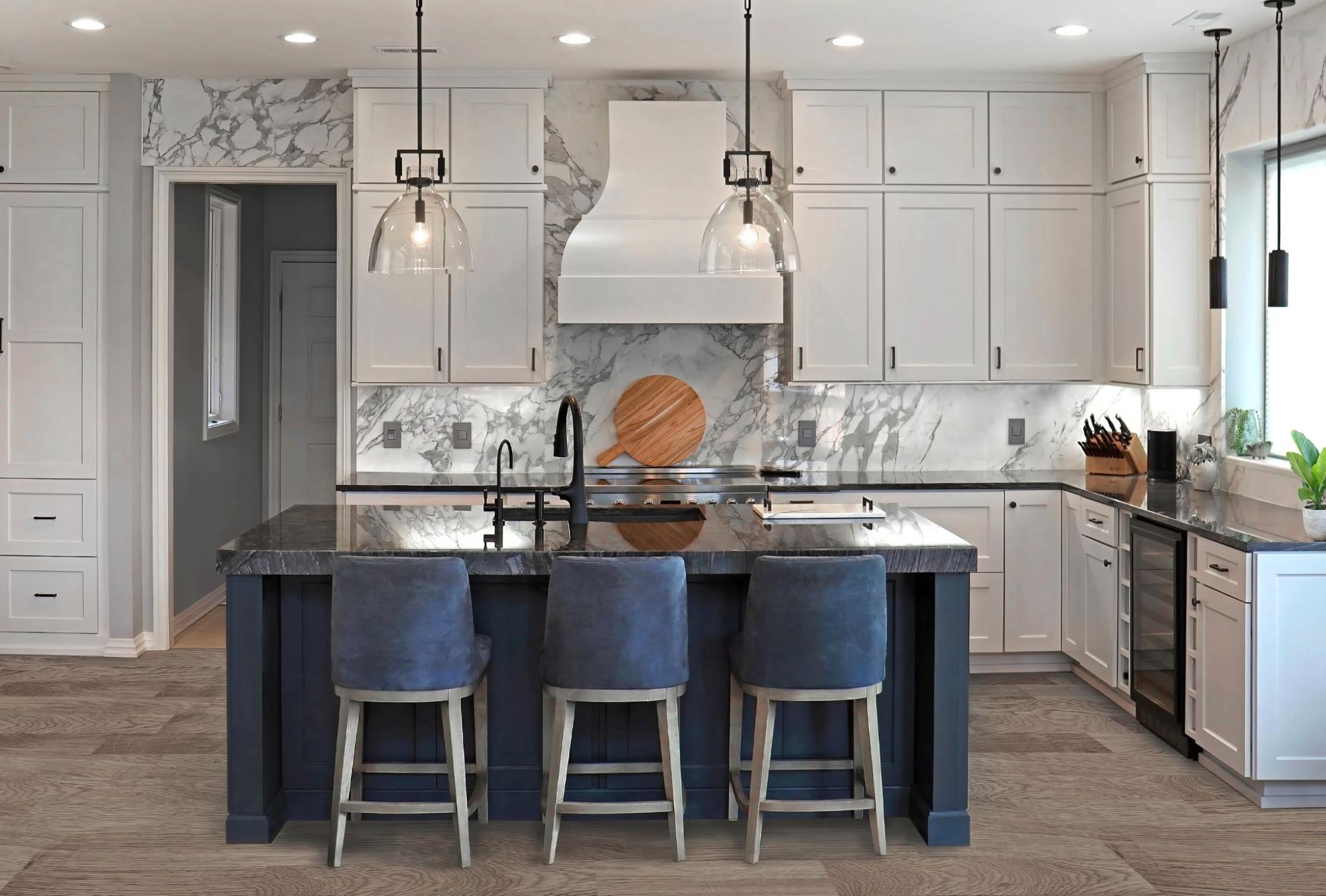
Not every material is built for the same kitchen. Here’s how the four main contenders perform when a household is actually using them.
Quartz for Easy Day-to-Day Care and Consistent Style
Quartz is an engineered surface made from crushed natural stone and resin. Because it’s non-porous, it never needs sealing and resists stains without much effort on your part. Spills wipe up cleanly and the surface stays consistent over time.
The tradeoff is heat tolerance. Quartz is more vulnerable to heat damage than natural stone, so hot pans should always go on a trivet. It also won’t have the natural variation that comes with quarried stone. Every slab is manufactured to a consistent pattern, which some homeowners prefer and others find less interesting.
For households that want reliable performance with minimal upkeep, quartz is often the easiest starting point. Explore quartz options.
Granite for Natural Character and Reliable Performance
Granite is a naturally quarried igneous rock with strong scratch resistance and solid heat tolerance for everyday cooking. Each slab is unique, which means your countertop will have natural color variation and character that no two kitchens share.
Granite does require periodic sealing to maintain its stain resistance. How often depends on the stone’s porosity and how heavily the kitchen is used, but for most households, once or twice a year is enough. When it’s properly sealed and maintained, granite performs well in active family kitchens.
If you want a natural surface that holds up to real use without a steep learning curve, granite is a proven choice.
Quartzite for Homeowners Who Want Natural Movement With More Durability
Quartzite is a metamorphic natural stone that’s harder than granite in many cases and less prone to etching than marble. It offers the dramatic veining and movement that many homeowners love about marble, but with better durability for kitchen use.
Like granite, it requires periodic sealing. It also carries a higher price point in most markets. One thing worth knowing: some slabs sold as “quartzite” are actually marble or dolomite, which behave differently under use. If you’re considering quartzite, ask your fabricator to confirm the material before you commit.
When Marble Can Still Make Sense, and When It Usually Does Not
Marble is calcite-based, which means it etches when it comes into contact with acidic foods and liquids. Lemon juice, vinegar and even certain soaps can dull the surface over time, and sealing reduces staining but does not prevent etching.
For most busy family kitchens with kids, frequent cooking and heavy island use, marble is a difficult fit. That said, some homeowners use it successfully by keeping a consistent sealing schedule and being mindful of what lands on the surface. If you’re drawn to marble’s look but want better performance, quartzite is worth a close look first.
How to Choose the Right One for Your Family’s Habits
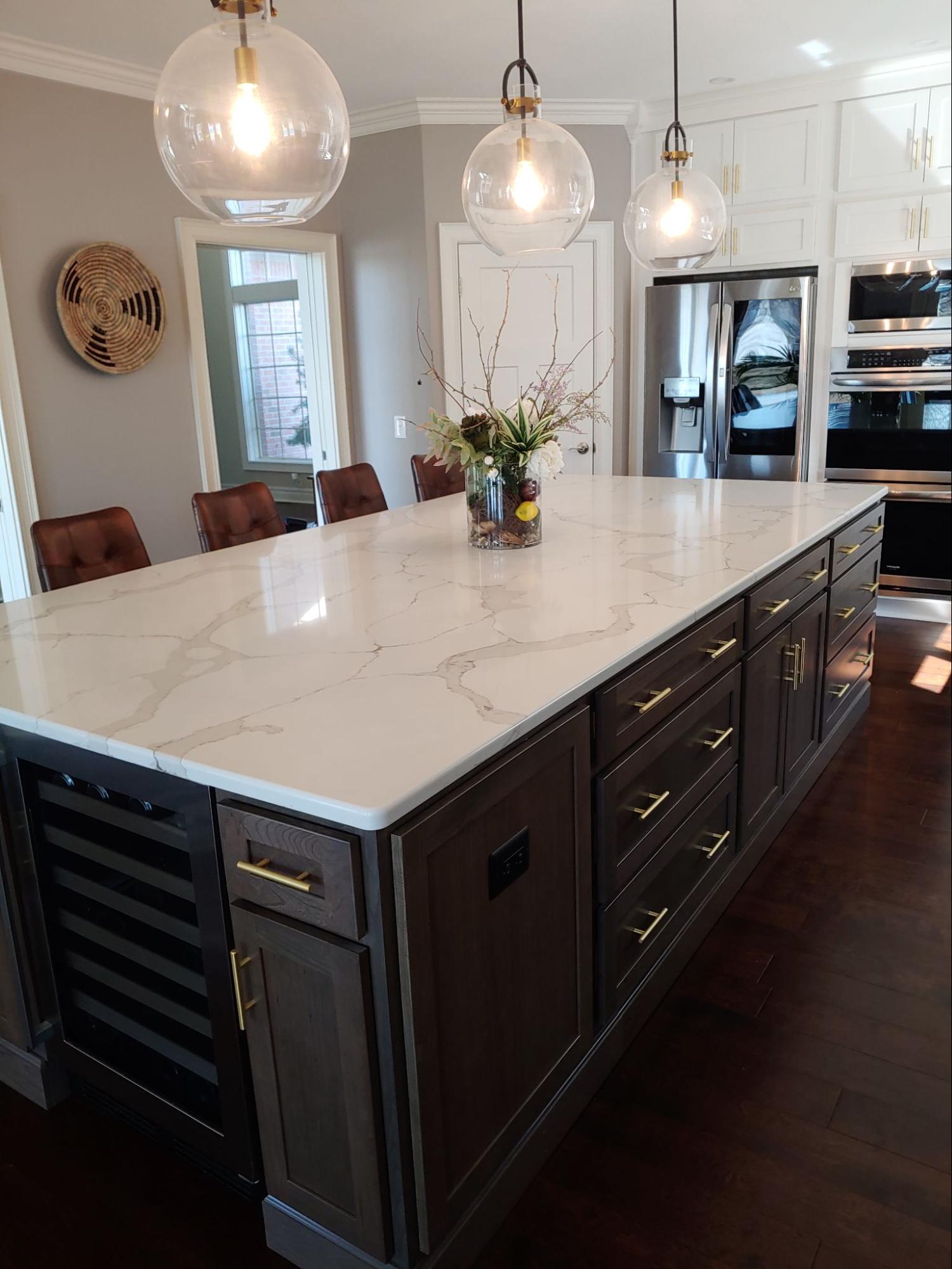
The material comparison only gets you so far. The real question is which surface fits the way your household actually uses the kitchen. These four scenarios cover most of what we hear from homeowners.
If You Cook Often
Frequent cooking means heat, oil, acidic ingredients and a prep surface that gets used hard. Granite and quartzite are the stronger fits here. Both handle heat better than quartz and hold up well under regular meal prep. If you go with quartz, use trivets consistently and keep hot cookware off the surface.
Marble is the most vulnerable option for active cooks. Acidic ingredients etch the surface, and a kitchen that sees daily cooking will show wear faster than most homeowners expect.
If Kids Use the Island for Everything
Kitchen island surfaces used for homework, crafts, snacks and spills need something forgiving. Quartz is the most practical choice in this scenario. There’s no sealing schedule to manage, cleanup is straightforward and the non-porous surface handles the kind of unpredictable contact that comes with kids.
Granite works well here too, as long as it’s sealed on schedule. The maintenance step is simple, but it does require follow-through.
If You Want Lower Upkeep
Low-maintenance kitchen countertops start with quartz. No sealing, no special cleaners and no periodic treatment. Mild soap and water handle most messes.
If you prefer natural stone but want to keep upkeep manageable, granite is a reasonable middle ground. The sealing process takes about 30 minutes once or twice a year and isn’t difficult.
If You Care Most About Natural Character
Quartzite gives you the movement and veining of marble with better resistance to everyday kitchen use. It’s the right call for homeowners who want a surface that feels distinctive without the maintenance demands that marble carries in an active kitchen.
If marble is still your preference, that’s a workable choice with the right habits and a consistent sealing schedule. Just go in with clear expectations about what the surface requires.
Common Mistakes Families Make When Choosing Countertops
Most countertop regret comes down to a few patterns that are easy to avoid once you know what to look for.
Choosing only by color or appearance. A surface that looks perfect in a showroom photo can be a poor fit for a household that cooks every night. Visual appeal matters, but it should be the final filter, not the first one.
Underestimating maintenance. Every natural stone surface requires periodic sealing. That’s not a dealbreaker, but it is a real commitment. Homeowners who skip sealing schedules on granite or quartzite end up with surfaces that stain more easily and look worn sooner than they should.
Assuming every “durable” surface behaves the same. Granite, quartzite and quartz are all marketed as durable, and all three are. But durable means different things across materials. Quartz resists stains without sealing but takes heat damage more easily. Granite handles heat well but needs maintenance to stay stain-resistant. These are not the same tradeoffs.
Ignoring how the kitchen is actually used. A household with young kids, a frequent cook or heavy island use has different needs than one that entertains occasionally. The right family-friendly countertop material is the one that fits the real kitchen, not the idealized version of it.
Final Decision Guide
If you’ve worked through the sections above, you likely have a shortlist already. Here’s a quick summary to confirm the fit.
Best for easiest care: Quartz. Non-porous, no sealing required and consistent performance with minimal effort. The strongest choice for households that want a great-looking surface without a maintenance routine.
Best for natural stone lovers: Granite. Strong everyday performance, heat tolerance and natural character that holds up well in active family kitchens. Requires periodic sealing, but the process is straightforward.
Best for bold movement and natural drama: Quartzite. Offers the veining and visual depth of marble with better resistance to the demands of daily kitchen use. Higher price point, but a strong long-term investment for the right household.
Best overall balance for many households: Quartz or granite, depending on whether you prioritize zero-maintenance simplicity or natural stone character. Both are proven performers in busy family kitchens and both are worth seeing in person before you decide.
View our live inventory to compare options across all four materials, or visit a showroom to see full slabs side by side.
Frequently Asked Questions
What countertop is easiest to maintain in a family kitchen?
Quartz requires the least day-to-day effort. It’s non-porous, needs no sealing and cleans up with soap and water. For homeowners who want natural stone with manageable upkeep, granite is the next closest option.
Is quartz or granite better for kids?
Both work well. Quartz has a slight edge for households with younger kids because there’s no sealing schedule to keep up with and the surface handles unpredictable spills cleanly. Granite performs just as well day-to-day as long as it’s sealed on a regular schedule.
What countertop hides mess best?
Surfaces with movement, variation or mid-tone coloring tend to show less between cleanings than solid white or very dark surfaces. Granite and quartzite both offer natural patterning that helps in this regard.
Is marble too high-maintenance for family kitchens?
For most busy households, yes. Etching from acidic foods is a real and ongoing concern, and no amount of sealing prevents it. Some families use marble successfully, but it requires consistent habits and realistic expectations.
Does resale value matter when choosing kitchen countertops?
Quality countertop materials, particularly natural stone and quartz, are generally viewed as a value-adding upgrade. That said, choosing a surface you’ll actually enjoy living with daily matters more than optimizing for resale.
Choosing the right countertop for a busy family kitchen comes down to one thing: fit. Not the most popular material, not the one with the best showroom photo, but the surface that matches how your household cooks, cleans and lives every day.