

Quartz is a practical starting point for a humid bathroom vanity because it needs no sealing and is easy to clean. Natural stone offers a different look, with care requirements worth understanding before you choose.
In Ohio, Michigan and Indiana, humid summer weather adds context, but shower steam and sink splashes matter throughout the year. The best bathroom countertop material fits those daily habits. Here’s how to compare the surfaces and check the details that keep water away from your vanity cabinet.
What a Humid Bathroom Asks of a Vanity Top
Look at where water stays after the bathroom gets used. A fogged mirror tells you the room is steamy; a puddle behind the faucet shows where cleanup needs more attention.
Moisture in the air places different demands on the vanity than water left against the stone or a joint.
Think about the rest of your morning routine too:
- Does water collect beneath soap dispensers or toothbrush cups?
- Do cosmetics or hair products sit directly on the surface?
- Can you reach behind the faucet with a cloth?
- Where do hot styling tools rest while they cool?
These questions help narrow your material choices before color enters the conversation. They also show where a small layout change could make daily cleaning easier.
For laundry rooms and other wet-prone spaces, our broader guide to countertops for high-humidity areas covers the different demands of each room.
Compare Materials by the Care They Need
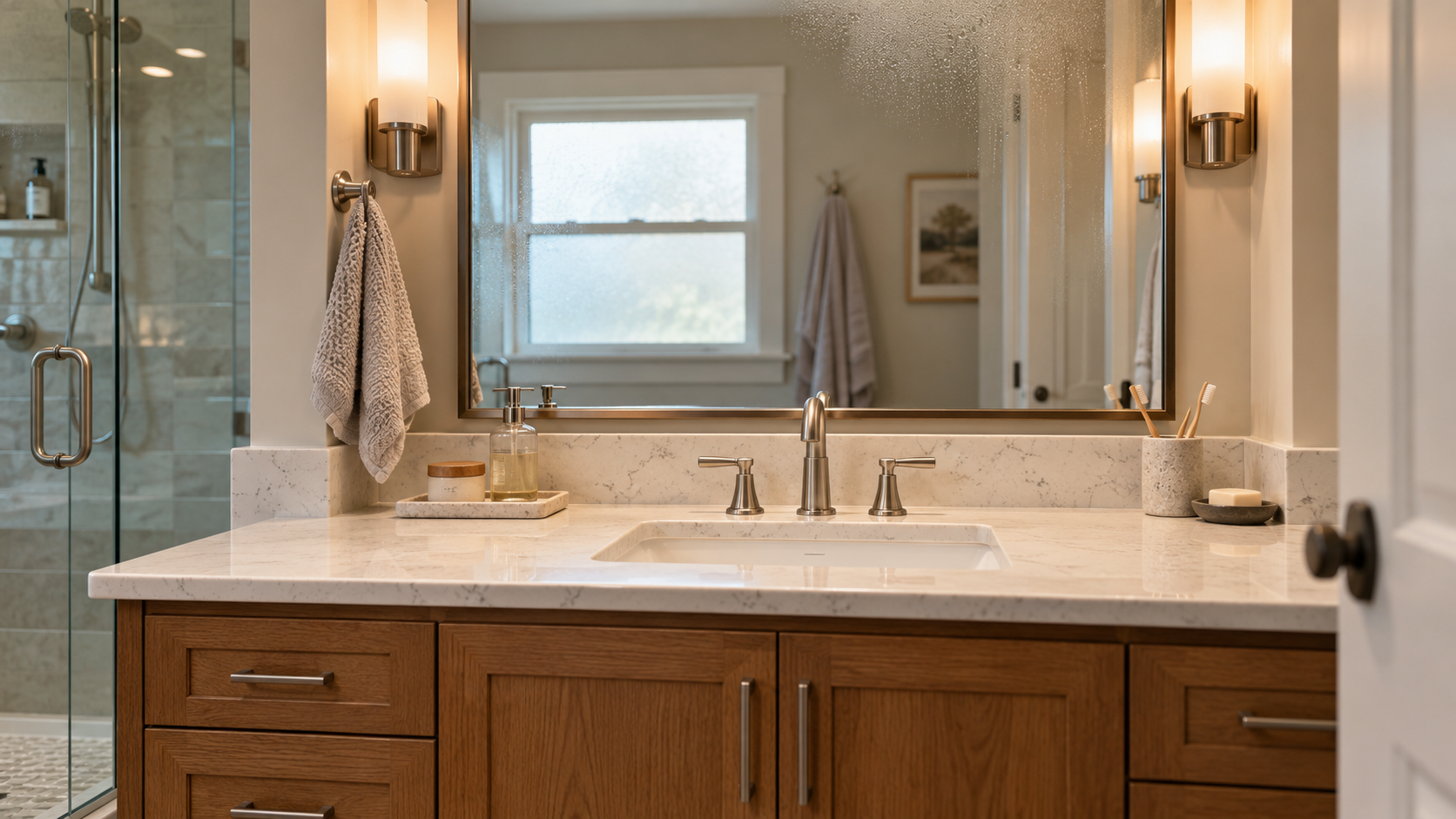
Quartz suits homeowners who want simple daily care. Its nonporous surface needs no sealing, so you have one less care task in a busy bathroom. Clean up spills from care products right away and use heat protection beneath styling tools. Use cleaners that suit the surface, too.
Granite brings a natural pattern that differs from slab to slab. It requires sealing and the right stone care. Water can still affect natural stone over time, even when sealed, so wiping the faucet area matters. Inspect the actual slab rather than assuming every granite behaves alike.
Quartzite is another natural stone, often chosen for its flowing pattern. It also needs sealing and quick cleanup, despite its hardness. Natural pits or fissures can be part of the slab. Ask about the actual slab before deciding whether its care needs fit your bathroom.
Marble works for homeowners who accept a surface that changes with use. Acidic products can etch its finish, leaving dull areas that sealing does not prevent. Consider your cleaning habits and the products used at the vanity before choosing it.
Compact surfaces such as Dekton offer another direction for a bathroom vanity. Review the exact product’s finish and care instructions, along with the sink and edge details your project needs.
If you’re still deciding between categories, compare natural stone and engineered surface tradeoffs before narrowing the colors.
Check the Sink, Faucet and Backsplash Details

A countertop choice should make the wet areas easier to reach. Before fabrication, review where water will collect and how you’ll wipe it away.
Bring these questions to your Design Consultant:
- Will my sink work with this material and vanity? Confirm the sink model and cutout before work starts. The choice affects the available counter space and the finished opening.
- Can I clean behind the faucet? A tight gap can leave water and product residue out of reach. Review the faucet position alongside the backsplash, rather than choosing each separately.
- Which joints need care over time? Ask about the sink connection and where the countertop meets the wall. A nonporous slab doesn’t waterproof the cabinet or eliminate upkeep at those joints.
- What care does this surface need? Get guidance for the actual stone and finish, including when it needs sealing. Avoid relying on a schedule intended for a different material.
Our guide to quartz and porcelain care differences offers more detail on those surface choices.
For natural stone, ask about the optional Granite Gold® Protection Plan and its current terms. Added coverage does not replace routine care.
Once the vanity is in use, keep the faucet area dry and deal with recurring puddles promptly. If a joint opens or water keeps reaching the cabinet, ask for advice before treating it as a material-cleaning issue.
Choose a Vanity Surface That Fits Your Routine
Choose the surface whose care fits the bathroom you use every day. Then check that the layout gives you room to keep it clean.
Bring vanity photos, rough dimensions and your sink plans to a Cutting Edge Countertops Design Consultant.
We’ll help you compare materials with your daily routine in mind. Find a showroom near you across Ohio, Michigan and Indiana and arrange a visit before you settle on a vanity top.
Frequently Asked Questions
What is the best countertop material for a humid bathroom?
Quartz is a practical first choice when simple care is the priority. It needs no sealing and handles normal bathroom use with suitable cleaning. Natural stone can also fit, if you accept its care needs and wipe up water left on top. The better decision comes from how the bathroom gets used: a shared vanity with frequent splashes has different demands from a powder room. Check the sink and backsplash joints as well, since the slab alone cannot keep the whole vanity dry.
Does quartz need sealing on a bathroom vanity?
No. Engineered quartz does not need resealing like many natural-stone surfaces. Follow the care guide for your quartz instead of adding sealer to make it better suited to the bathroom. Keep personal-care spills from sitting on the counter and clean with compatible products. Pay attention to the joints around the sink as well. A loose connection or failing seal at the wall needs its own attention, even when the top itself needs no sealing.
Can sealed granite still show water marks?
Yes. Sealing reduces absorption risk, but water can still affect natural stone. A mark may come from a deposit on top or water within the stone. Other causes may need a closer look. Wipe up standing water and follow the care guidance for your slab. Don’t assume another coat of sealer will remove a mark or make the stone waterproof. If a color change lasts or keeps returning near the faucet, share photos before trying a treatment.
Do compact surfaces make the entire vanity waterproof?
No. The surface is one part of the installation. Water can still reach the cabinet through a damaged joint, a sink connection or another opening. Choose a compact surface for its look and how it performs, then review the details with your Design Consultant. Keep wet areas accessible for cleaning and check joints as part of normal upkeep. If water reaches the cabinet, find the cause. A new top alone may leave the same route open for water.