

Contrasting kitchen island countertops work when the island and perimeter share a clear connection, even if their colors differ. That connection might come from a warm undertone or a vein that picks up the cabinet color.
Start with the finishes you’re keeping. Then decide whether the island needs a different color, stronger movement or both. The pairings below show how to make that choice. Compare real samples to judge the whole kitchen before either surface is cut.
Choose the Kind of Contrast Your Kitchen Needs
If your perimeter countertops are staying, use them as the starting point. Look at the base color and the tones in the pattern, then compare those with your cabinets and backsplash.
You can create contrast without changing everything:
- Change the color depth. A darker island can stand apart from light perimeter countertops while sharing a warm or cool undertone.
- Change the pattern. An island with broader movement can stand out against a quieter perimeter in the same color family.
- Change the material. Natural stone on the island creates variation beside engineered quartz, with different care needs to weigh.
A kitchen with bold cabinet colors or a patterned backsplash may already have enough contrast. In that case, a subtle difference between the two countertops can be enough.
For the broader design approach, our guide to two-tone kitchen countertops explains how the surfaces work together.
Compare Three Island and Perimeter Pairings
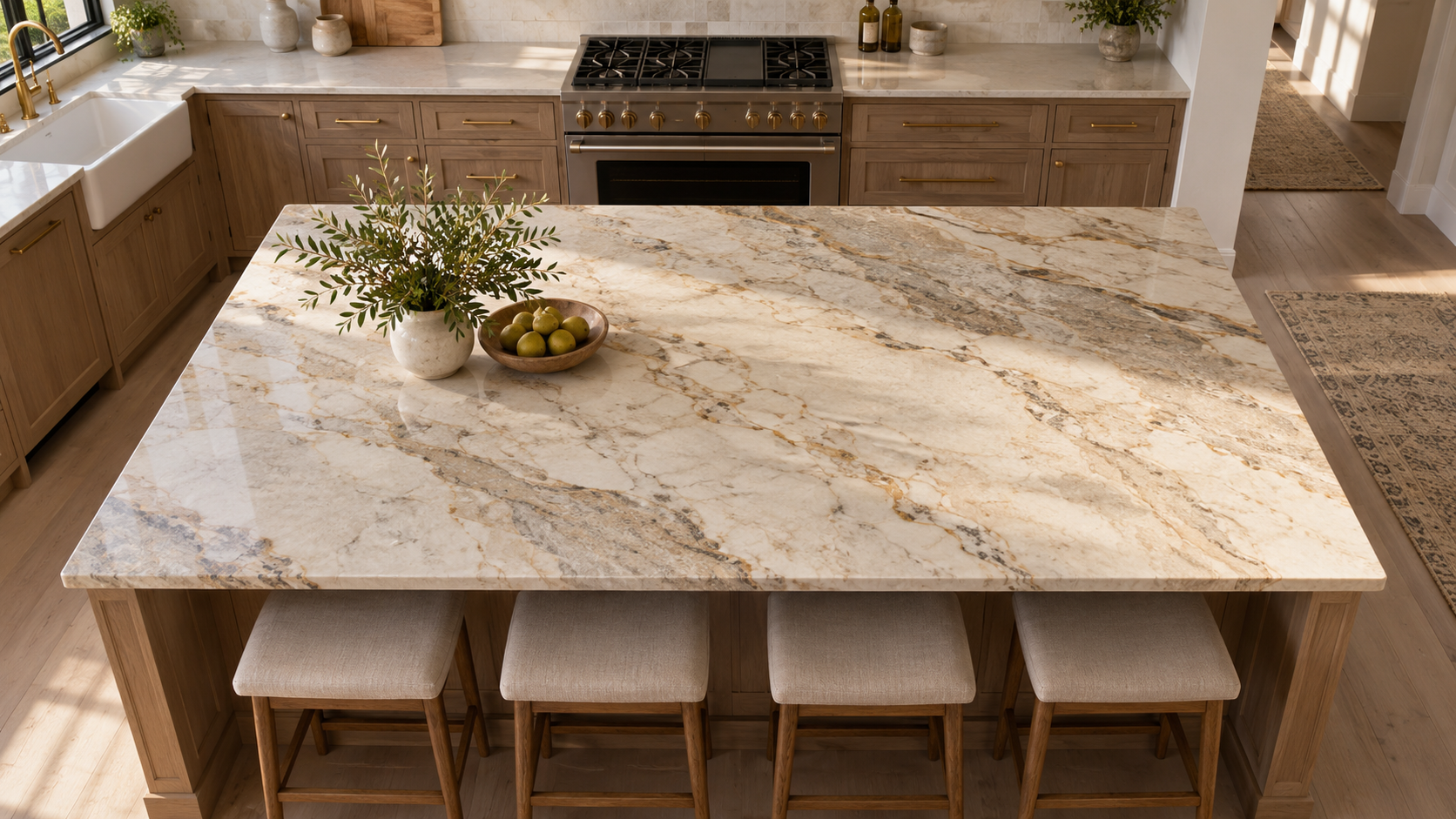
These pairings give you a place to start when you compare actual slabs. The right version depends on the colors already in your room.
Quiet Warm-White Quartz With Warm-Veined Quartzite
Keep the perimeter pattern restrained, then use the island to show more movement. Beige or soft gold tones in the quartzite can connect with the warm white around the room. This pairing suits a kitchen where you want a natural-stone feature without a bold pattern on every counter. Quartzite needs sealing and quick spill cleanup, even when the perimeter quartz does not.
Light Quartz With Deep-Toned Granite
A darker granite island creates a clear break from pale perimeter countertops. Check the flecks and background tone against your cabinets so the contrast feels connected. Dark polished surfaces can make light dust or dried water marks stand out, so judge the finish alongside the color. Granite also needs sealing and care suited to the actual stone.
Subtle Quartz With More Expressive Quartz
Use the same material category with a difference in pattern scale. A lightly patterned perimeter can work beside a quartz island with broader veining, when their undertones relate. You get contrast without introducing a natural-stone sealing routine, though both surfaces still need heat protection and compatible cleaners.
If you want other ways to create focus, explore our kitchen island countertop ideas. Keep this choice tied to how you use the island, especially when it is your main prep space.
Test the Pairing With Real Samples and a Slab Layout
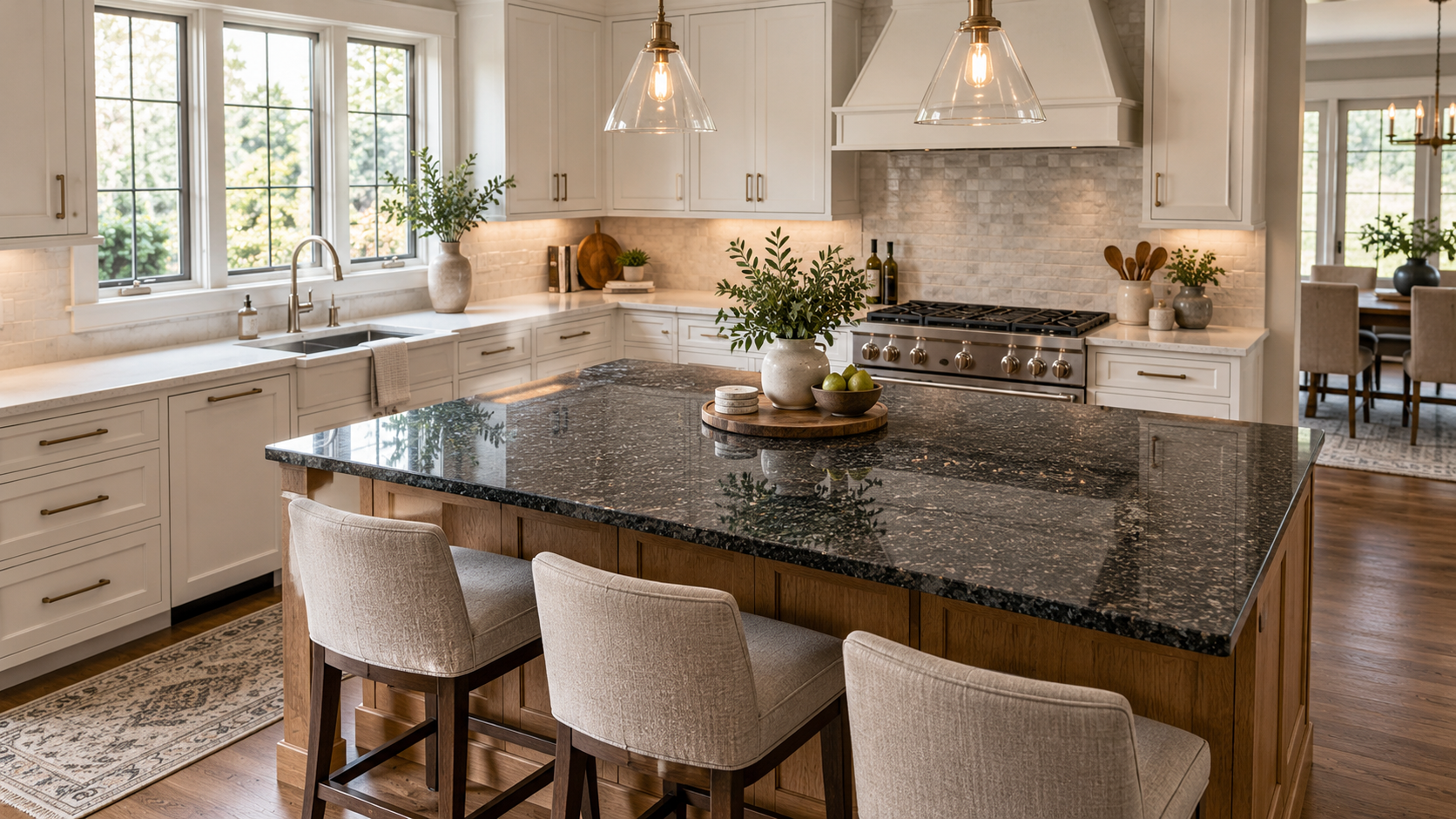
Compare the whole combination before committing to either surface. A small sample can show color, but it cannot show how a large vein will cross your island.
- Bring the finishes that stay. A cabinet door and backsplash sample are useful. If you can’t bring them, take clear photos and note which colors you want to retain.
- Review both surfaces in different light. Look at available samples in daylight and under your kitchen lighting. A white that looks neutral in one room can read warmer or cooler beside another finish. Our guide to coordinating countertop undertones explains that relationship.
- Check movement at full scale. Review the actual slab, your island dimensions and any likely seams. For heavily veined material, ask your Design Consultant about optional Digital Layout services and how you can participate in the layout review.
- Include any waterfall leg in the plan. A waterfall leg carries stone down the side of the island to the floor. Our waterfall edge is a separate edge profile. The leg adds material and fabrication work, so include it in the quote from the beginning.
Ask about each surface’s care requirements before making the final choice. For natural stone, you can also discuss the optional Granite Gold® Protection Plan and current terms. Coverage does not replace everyday care.
Compare the Pairing Before You Commit to Either Surface
Bring photos of your perimeter countertops and the finishes you’re keeping, along with rough island dimensions. That gives us something concrete to compare against the slabs you like.
At Cutting Edge Countertops, your Design Consultant can help you review the pairing and discuss layout options. Book an appointment to compare surfaces together. You can also browse live inventory before your visit and note the options you’d like to see, and check what is still available.
Frequently Asked Questions
Should the island be lighter or darker than the perimeter?
Either direction can work. Start with the finishes already in the room and decide how much attention you want the island to draw. A dark island against pale perimeter surfaces draws the eye to the island. A lighter island can provide contrast beside darker countertops or cabinets. Compare undertones as well as lightness, because two surfaces can differ in depth and still coordinate. If the backsplash already has a strong pattern, consider a quieter island rather than adding another bold feature.
Can the island and perimeter use different materials?
Yes. Quartz around the perimeter and natural stone on the island can create a deliberate difference in pattern and character. Think about how each material fits your daily use. An island used for food prep needs the same attention to spills and hot cookware as the rest of the kitchen. Granite and quartzite require sealing, while quartz does not. Compare those care needs alongside the look so you know what to expect from both surfaces once they are in your home.
Can I replace only the island countertop?
An island-only update is worth discussing if the perimeter countertops are staying. That depends on the current base and how the top is attached. A sink or built-in appliance can affect the work too. Share photos and measurements with your Design Consultant before assuming it will be a simple swap. For the new surface, compare against the actual perimeter material rather than trying to remember its color. A deliberate contrast can be easier to judge than an attempted match to an older slab with a different pattern.
Is a waterfall leg the same as a waterfall edge?
No. A waterfall leg is the vertical stone panel that continues from the island countertop down to the floor. It changes the island’s look and adds work beyond making the top itself. Cutting Edge Countertops also offers an edge profile named waterfall edge, which is a separate choice. Use the term “waterfall leg” when discussing the floor-reaching panel with your Design Consultant. If you’re considering one, our guide to whether a waterfall leg fits your kitchen explains what to weigh for your layout and budget.