

A red wine ring on white marble has a way of stopping you cold. The instinct is to scrub it hard with whatever’s under the sink. That instinct is exactly how a small stain becomes lasting damage. Acidic cleaners and abrasive pads can etch and dull marble, turning one problem into two. The good news is that safe marble stain removal is mostly about slowing down and matching the treatment to the mark. This guide walks you through what to do first, what to avoid and when a stain is worth a professional’s eye.
First, Is It a Stain or Etching?
Before you treat anything, figure out what you are actually looking at. This single step prevents the most common marble care mistake, because stains and etching call for completely different responses.
Here is how to tell them apart:
- A stain is discoloration that has soaked into the stone. Think a dark ring from oil or a brown mark from coffee. The marble has absorbed something, and the color sits below or within the surface.
- Etching is physical damage to the finish. Acid has eaten into the polish, leaving a dull, cloudy or lighter spot that often feels slightly rough. It is not a color sitting on top. It is a change to the surface itself.
- A scratch is a fine line or scuff from something abrasive dragging across the stone.
The quick test: a stain is usually darker than the marble, while an etch is usually duller or lighter. Run your finger over it. A stain feels smooth. An etch or scratch often catches slightly.
This matters because stain removers do nothing for etching, and treating an etch like a stain just wastes time and risks more harm. Knowing which one you have tells you whether to reach for a treatment or call a professional.
Safe First Steps Before Treating a Marble Stain
When something spills, your first moves matter more than any product. Calm, low-risk steps protect the stone while you decide what to do.
Start here every time:
- Blot, do not wipe. Lift the spill with a soft cloth or paper towel. Wiping spreads it and grinds it in.
- Clean gently. Use warm water and a few drops of mild dish soap, or a cleaner labeled stone-safe or pH-neutral. Rinse and dry with a soft microfiber cloth.
- Give it time. Some fresh marks lift with simple cleaning once the surface dries fully. Do not judge the result while it is still damp.
- Test before you treat. If you move to any stain treatment, try it first in a hidden spot to see how the marble responds.
A soft cloth does more good here than any harsh product. The goal at this stage is to remove what you can without introducing anything acidic or abrasive. If the mark remains after the surface is fully dry, then you move on to a treatment matched to the stain type.
How to Treat Common Marble Stains
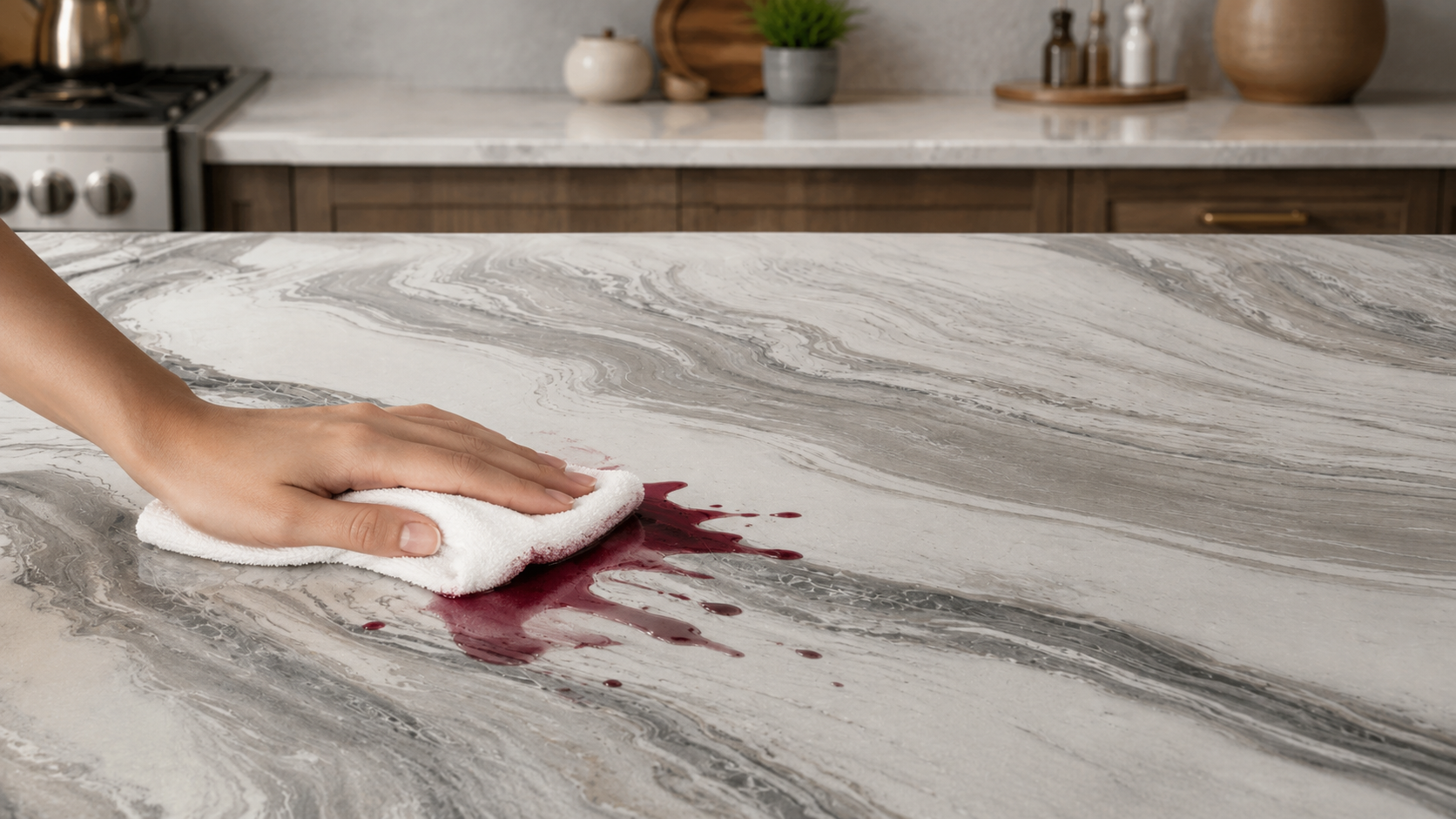
Different stains need different treatments. Matching the method to the mark is what keeps a fixable stain from becoming a bigger problem. For deeper stains, a poultice can help. That is a paste that sits on the stain, draws it out as it dries, then gets wiped away.
Organic Stains from Coffee, Wine or Food
Organic stains often leave a pinkish or brown tone. After gentle cleaning, a poultice made with a small amount of hydrogen peroxide can help draw out the discoloration on light marble.
- Apply the paste over the stain, cover it and let it dry fully
- Remove it gently and rinse with water
- Repeat if the stain has faded but not fully lifted
Stop if the surface looks duller or rougher afterward, since that points to etching rather than a stain.
Oil-Based Stains from Cooking Oils or Grease
Oil stains usually darken the marble in a soft, spreading shape. These respond to a poultice that pulls the oil up and out.
- A baking soda and water paste is a common, gentle option
- Apply, cover and let it dry completely so it can draw the oil out
- Wipe away, rinse and assess before repeating
Baking soda is alkaline, not acidic, so it will not etch marble. Apply it gently, though, since it is mildly abrasive on a polished finish.
Water Marks and Rings
Light water rings are sometimes surface buildup rather than a true stain. Gentle cleaning and buffing with a dry microfiber cloth can clear many of them. If a ring is actually a dull etch mark from a glass, no stain treatment will fix it, and it likely needs professional polishing.
The honest rule across all three: treat patiently, stop if the surface changes texture and accept that not every mark comes out at home.
What Not to Use on Marble Countertops
Some of the most common household cleaners are the worst things you can put on marble. Avoiding them prevents far more damage than any treatment repairs.
Keep these away from marble:
- Vinegar and lemon juice. Both are acidic and will etch the surface, even diluted. Natural does not mean safe on marble.
- Acidic or all-purpose cleaners. Many bathroom and glass cleaners are acidic enough to dull the polish.
- Abrasive pads and powders. Scouring pads and gritty cleansers scratch the finish.
- Bleach and ammonia. Harsh chemicals can damage both the sealer and the stone over time.
- Hard scrubbing. Pressure does not help and can leave scuffs. Patience does more than force.
For a fuller list of habits that quietly wear down stone, see our guide on how to avoid these 6 common mistakes. One more point worth clearing up: sealing helps reduce staining, but it does not prevent etching. A sealer slows how fast liquids absorb. It does nothing against acid hitting the polish.
For added protection, Cutting Edge Countertops offers the optional Granite Gold® Protection Plan with 5 or 10-year coverage as an extended countertop warranty. While routine sealing and daily cleaning cannot physically prevent acidic substances from causing surface etching, this coverage can provide a safety net if accidental damage occurs.
If a covered stain, chip or chemical etch happens, the plan helps cover the cost of having a certified technician professionally repair the surface.
For everyday countertop care, Cutting Edge Countertops also carries MORE® Surface Care cleaner in its showrooms. This a pH-neutral, stone-safe cleaner is a better choice for everyday care than harsh household cleaners, especially on marble surfaces that can be damaged by acidic or abrasive products.
When to Call a Countertop Professional
Some marks are beyond a home fix, and recognizing that early saves the surface. It is time to bring in a professional when:
- A dull etch mark covers a noticeable area or will not improve
- A stain sits deep and resists repeated poultice treatments
- The polish looks worn or cloudy across a wider section
- You are unsure whether you are dealing with a stain, an etch or a scratch
Professional stone care can often restore etched or dull marble through polishing and refinishing, work that is difficult to do well at home. As a fabricator accredited by the Natural Stone Institute, Cutting Edge Countertops can look at what you are dealing with and walk you through the options honestly.
Protect the Marble You Love
Knowing how to remove stains from marble safely really comes down to a few calm habits. Identify the mark before you treat it, start with the gentlest steps, match any treatment to the stain type and keep acids and abrasives far from the stone. Do that, and most everyday spills stay minor. For the rest, a professional can help.
Thinking about marble for a new project, or want help caring for the surface you have? If you are still comparing options, our guide on natural stone vs engineered surfaces lays out the tradeoffs. Schedule an appointment at a showroom near you and a Design Consultant can guide you through materials and care. You can also browse live inventory to see current options.
FAQs About Marble Stain Removal
Can you remove marble stains without damaging the surface?
Often, yes. Gentle cleaning and a stain-matched poultice can lift many organic and oil-based stains safely. The key is avoiding acidic and abrasive products and stopping if the surface starts to look duller or rougher.
Can baking soda etch marble?
No. Baking soda is alkaline, not acidic, so it does not etch marble the way vinegar or lemon does. It is mildly abrasive, though, so use it as a gentle paste rather than scrubbing it into a polished surface.
Does sealing marble prevent stains?
Sealing reduces how quickly marble absorbs liquids, which lowers staining risk and buys you time to wipe spills. It does not make marble stain-proof, and it does not prevent etching from acidic spills.
Can vinegar clean marble countertops?
No. Vinegar is acidic and will etch marble, leaving dull marks that do not wipe away. Use warm water with mild dish soap or a pH-neutral, stone-safe cleaner instead.
Can etching be removed at home?
Light etching sometimes improves with a marble polishing product, but deeper or widespread etching usually needs professional polishing and refinishing to fully restore the finish.