

To keep polished granite countertops shiny, clean gently, rinse away residue and dry the surface with a soft cloth.
A cloudy patch may be leftover soap or mineral buildup hiding the finish underneath. Adding more product before checking the cause can leave you with more film.
Here’s how to protect the polish you already have and recognize when a dull area needs a closer look from a stone professional.
Find Out What Is Making the Granite Look Dull
Start by noticing where the change appears and when you first saw it. Haze after cleaning suggests a different cause from a dark patch beneath a bottle left on the counter.
These clues help you describe the issue:
- Streaks across a recently cleaned area: Soap or cleaner may remain on the surface.
- A pale ring near the faucet: Mineral deposits may have collected where water dries.
- A darker mark that remains after drying: Something may have absorbed into the stone.
- Fine lines or a persistent change in reflection: The finish may need assessment after normal cleaning.
Some causes look alike. Everyday kitchen acids also affect granite and marble in different ways.
Also confirm the original finish. A honed surface has a lower sheen by design; our guide to polished and honed granite explains what you should expect from each.
Follow a Gentle Clean, Rinse and Dry Routine
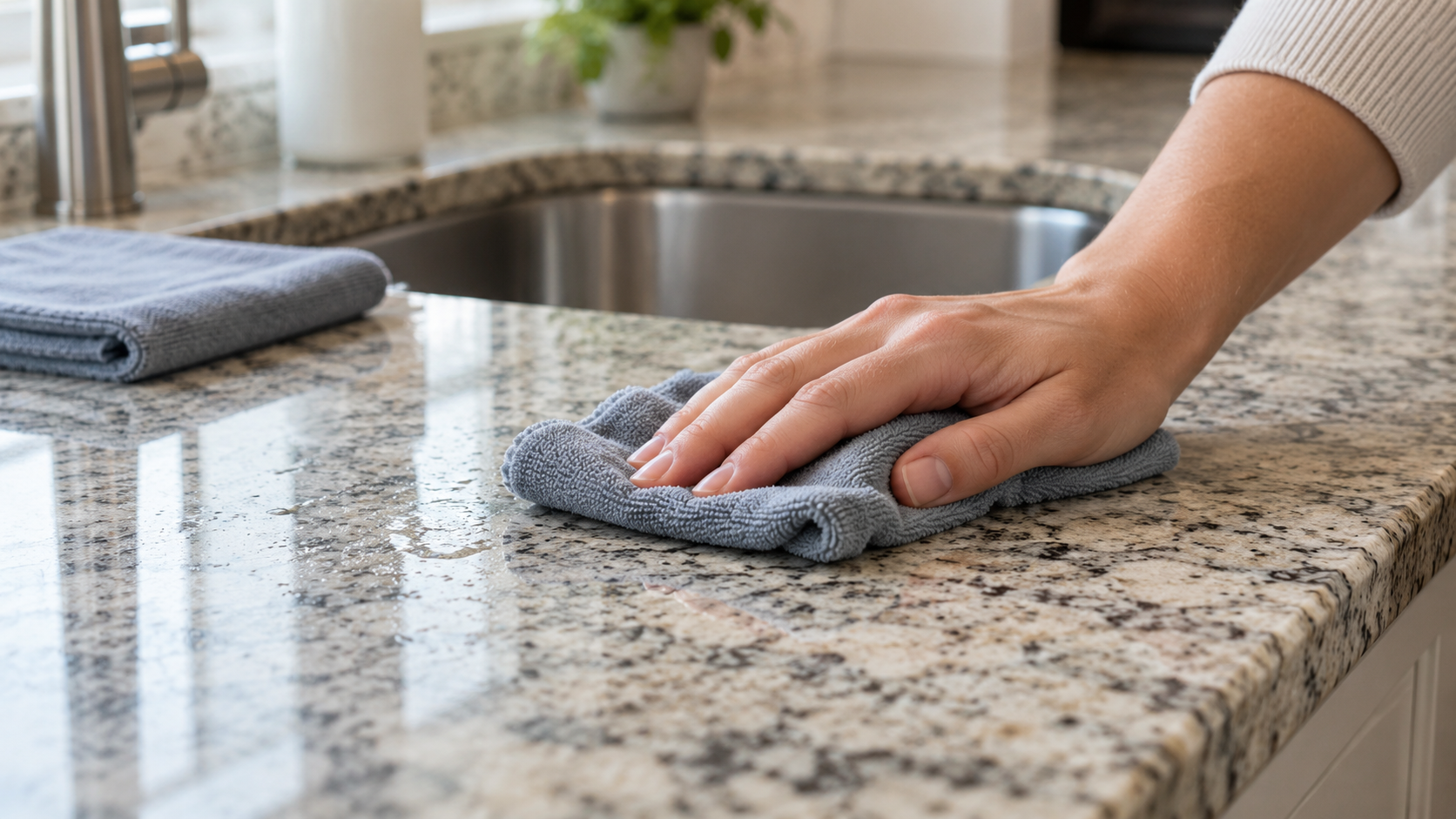
You preserve the existing polish by cleaning without leaving another layer behind. Begin with the care guide for your granite and any treatment already on it.
- Remove loose grit. Lift crumbs and particles with a soft cloth before wiping across the counter. Avoid dragging a heavy appliance or a gritty object over the surface while clearing space.
- Use a stone-safe cleaner in the right amount. Ask us about a pH-neutral cleaner made for granite. Mild soap may also suit your care guide, but too much can leave a film. Follow the product’s directions rather than adding extra for more shine.
- Rinse with clean water. Use a fresh damp cloth to remove the cleaning solution. Keep rinsing the cloth so you don’t spread the same residue back across the counter.
- Dry with a soft, clean cloth. Pay attention around the faucet and beneath dispensers. A final gentle wipe with dry microfiber removes moisture and helps you see the surface clearly.
Check the result once the stone is dry. If haze remains, pause before switching to a stronger treatment.
Avoid acidic household mixes and abrasive pads.
Furniture waxes or oils can add unwanted residue, while harder scrubbing can create more wear. Our guide to countertop cleaning mistakes covers habits that can undermine an otherwise sensible routine.
Know When Sealing or an Assessment Is Relevant
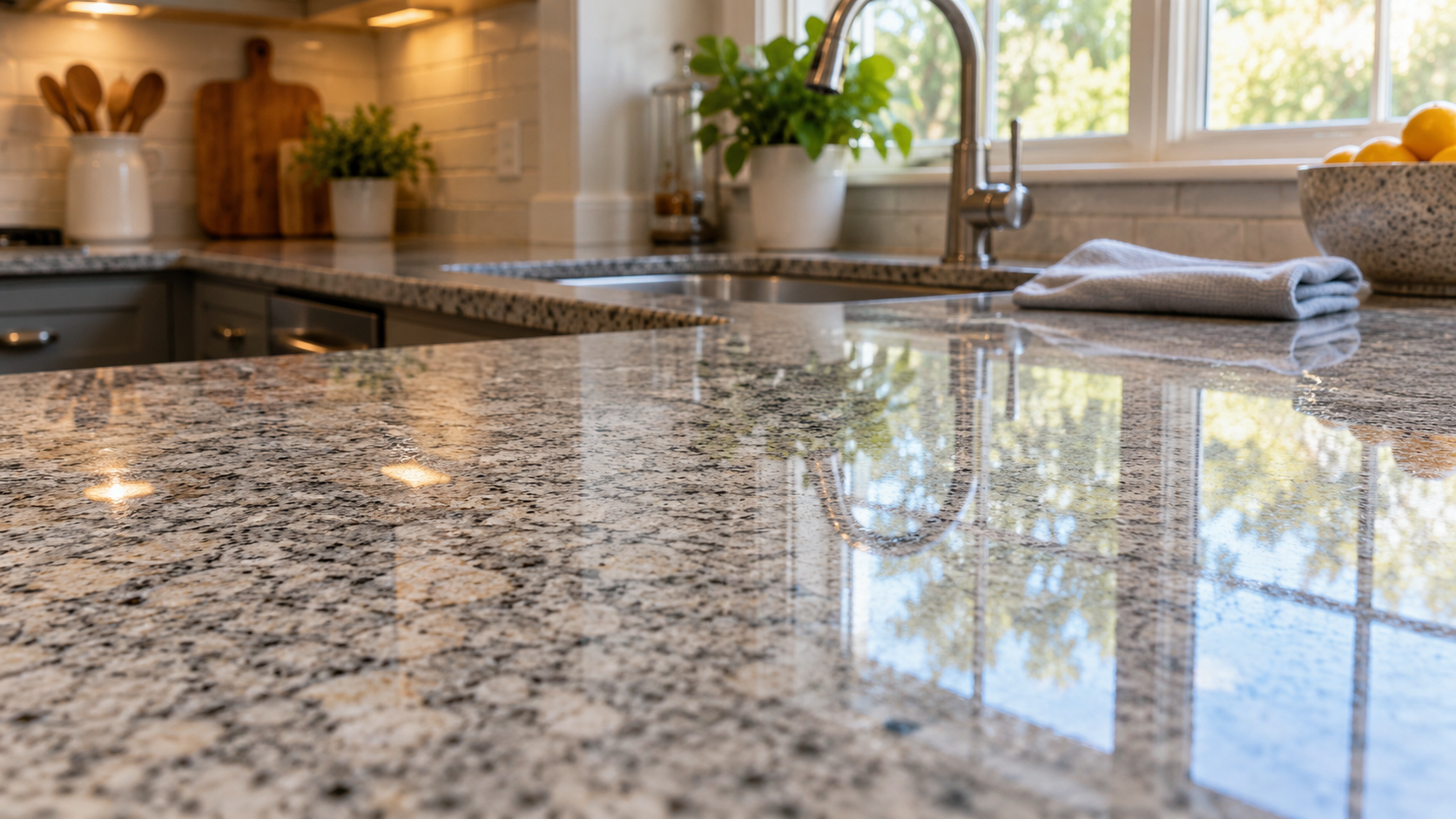
Sealing reduces absorption risk. The polished finish comes from smoothing the stone during processing, so it reflects light. Those are separate functions.
A penetrating sealer does not recreate that finish or repair scratches. It also does not make granite stain-proof, so spills still need prompt cleanup after sealing.
If you wonder whether your stone needs resealing, check its care history and ask what your slab needs. A fixed yearly schedule can overlook the type of stone and the treatment already on it. Watching water bead on the surface cannot explain every change in its look.
Our guide to how granite sealing works explains the questions to ask before adding more product.
Persistent dullness calls for a different conversation.
Photograph the affected area after normal cleaning and drying, including one image showing where it sits in the room. Note whether the change appeared suddenly or developed over time.
Share what has been contacted in the area, including cleaners or spills. That gives a professional more useful information than “the granite needs polish.”
Avoid sanding, scraping or applying polishing powders while you wait for advice. A qualified stone-restoration professional may need to assess the finish or identify a deposit. The right treatment depends on the cause, and another coat of sealer cannot resolve every dull patch.
Keep the Finish Clear Without Adding More Products
Keep your routine simple enough to repeat, and judge the result after the surface is dry. If the same patch remains, ask about its cause before trying another treatment.
Contact Cutting Edge Countertops for care direction. Send clear photos and tell us which products you’ve used, along with when the change appeared. That information helps the conversation start with the actual surface concern. A persistent finish change may need assessment by a stone-restoration professional.
Frequently Asked Questions
Does sealing granite make it shiny?
A standard penetrating sealer reduces absorption; it does not create the smooth finish that gives polished granite its reflection. Adding sealer to chase a shine can leave the original issue unresolved, especially if a film already coats the stone. Follow your stone’s treatment guide and ask whether it needs resealing before adding another coat. If you see dullness rather than liquid soaking in, explain that when you ask for advice. The right next step depends on what caused the change.
Why does granite look cloudy after cleaning?
Soap or cleaner left behind can form a film that makes the reflection look cloudy. Start by following your granite’s care instructions with a stone-safe cleaner, then rinse thoroughly and dry with a fresh cloth. Using more product may add to the residue instead of clearing it. If the cloudiness remains, other causes may need assessment, such as mineral buildup or a change in the finish. Note where the haze appears and which products you’ve used rather than assuming it needs polishing.
Can I use vinegar to remove water spots from granite?
Avoid vinegar as a general granite-cleaning remedy. The stone’s mineral makeup and past treatments matter. Avoid using an acidic mix on a mark whose cause you don’t know. A water spot may be a deposit on top or a change within the stone. Match the treatment to the cause. Use the care guidance for your actual granite. If ordinary stone-safe cleaning does not remove the mark, ask what to do next before trying acids or a rough tool.
When does dull granite need closer look from a stone professional?
Seek an assessment when a mark remains after normal cleaning and drying, especially if it changes color or keeps returning in the same place. Scratches, chips or an uneven reflection also deserve a closer look before you attempt a fix. Take photos in normal room light and describe when you first noticed the change. Include the products used and any known spill or impact. An expert can then check for surface film or damage. They may also need to look at whether something has soaked into the stone.